


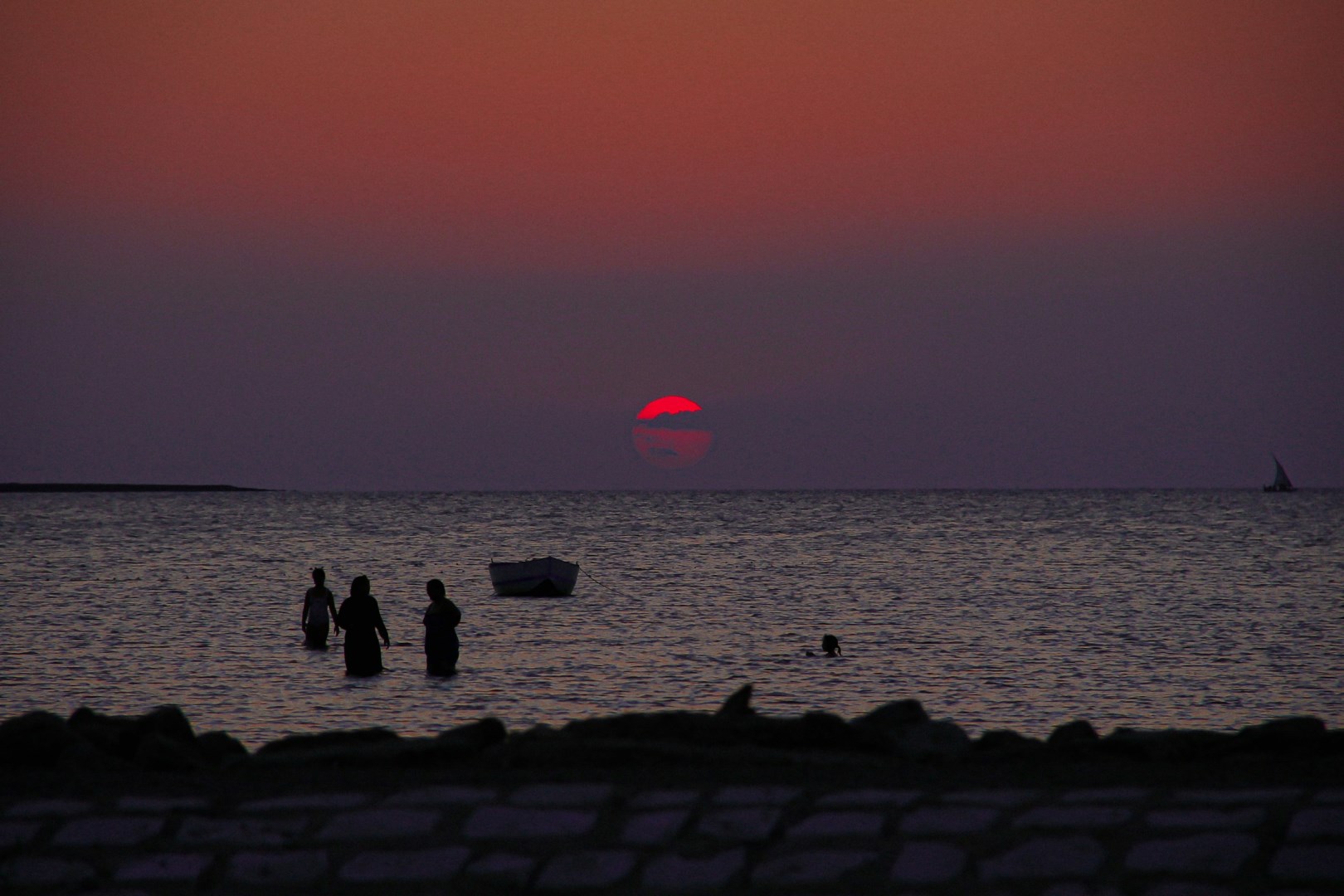
Sfax is a major port city on Tunisia’s eastern Mediterranean coast and the principal urban centre of the country’s south-central region. Its character is closely connected with commerce, agriculture, fishing and maritime trade rather than resort development. At its heart is a walled medina with an unusually regular street plan, while the modern city spreads outward toward the port and surrounding olive-growing countryside. Sfax is also a gateway to the nearby Kerkennah Islands, whose shallow coastal waters and long fishing traditions form an important part of the region’s economic and cultural identity.
The Medina of Sfax preserves one of the most distinctive examples of traditional Arab-Islamic urban planning in North Africa. Its streets follow a largely geometric pattern within high crenellated walls reinforced by towers. The Great Mosque stands near the centre, with commercial souks extending toward Bab Djebli, one of the medina’s original gates. Bab Diwan faces toward the sea and remains another important entrance. Traditional workshops, small shops, mosques and residential buildings occupy the narrow streets, reflecting the medina’s continuing role as a working commercial district rather than an area devoted mainly to visitors.
The medina’s ramparts are among Sfax’s defining landmarks, enclosing a rectangular area of roughly 24 hectares. Dar Jellouli, a traditional residence within the old city, provides an example of domestic architecture associated with prosperous Sfax families. Outside the walls, the port reflects the city’s long relationship with Mediterranean trade and fishing. The surrounding Sfax region is also one of Tunisia’s important olive-growing areas, with extensive groves spreading across the dry coastal plain. Offshore, the low-lying Kerkennah Islands are known for shallow lagoons, palm-lined landscapes and traditional fishing methods adapted to their distinctive marine environment.
Food in Sfax reflects both the sea and the agricultural land surrounding the city. Fish and seafood are central to local cooking, while olive oil produced in the region is an important ingredient in everyday dishes. Sfax is particularly associated with spicy preparations and fish-based couscous, often seasoned with harissa and local spices. The city is also known for pastries and sweets made with almonds, sesame, dates or other regional ingredients.
Other Popular Destinations in Tunisia