

Wailua is a community on the eastern side of Kauaʻi, Hawaiʻi, where the Wailua River reaches the Pacific Ocean. The area includes beaches, river valleys, coconut groves, and forested foothills, with the dramatic peaks of the island’s interior rising nearby. Wailua is one of the main population centers on Kauaʻi and lies between the towns of Kapaʻa and Līhuʻe. Its location provides access to both the island’s eastern coastline and the Wailua River, making it an important base for exploring waterfalls, hiking trails, beaches, and inland valleys.
Wailua has deep Native Hawaiian cultural significance, particularly around the Wailua River and surrounding valley. The river was regarded as a sacred area and was associated with Hawaiian chiefs and important ceremonial sites. ʻĀhuimanu and other historic locations in the Wailua area reflect the long period of Native Hawaiian settlement and traditional land use. Nearby Wailua Complex of Heiau includes several significant archaeological sites, while the Hauola and Holoholoku sites provide evidence of the area's spiritual and political importance. Hawaiian place names and cultural traditions remain an important part of Wailua’s identity.
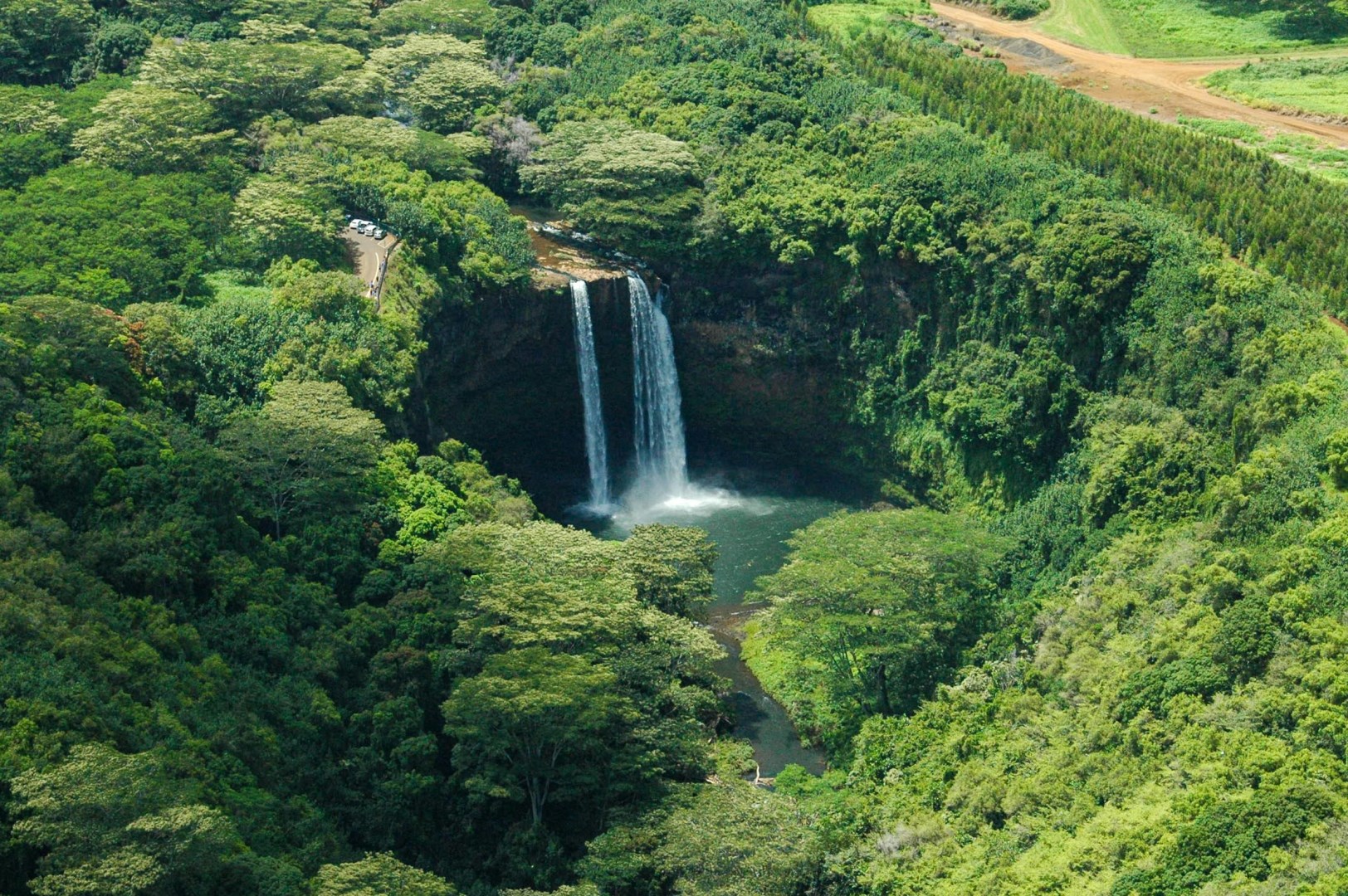
The Wailua River is one of the area's defining natural features and is the only navigable river in Hawaiʻi. Visitors can explore its calm lower section by kayak or paddleboard, while roads and trails lead toward waterfalls and viewpoints farther inland. ʻŌpaekaʻa Falls is a prominent waterfall visible from a roadside lookout, and Wailua Falls drops into a forested valley near the southern edge of the community. The nearby Wailua River State Park protects a landscape of tropical vegetation, steep valleys, and archaeological sites. The eastern coast also includes Wailua Beach, where the river meets the Pacific.
Food in Wailua reflects the multicultural traditions of Kauaʻi, with local restaurants and markets offering poke, fresh fish, plate lunches, tropical fruit, shave ice, and dishes influenced by Japanese, Filipino, Chinese, Korean, and other communities. Coconut trees are particularly associated with the area, and the nearby Coconut Marketplace includes shops and places to eat in a setting connected to Kauaʻi’s plantation-era landscape. One distinctive feature of Wailua is the Wailua River’s status as Hawaiʻi’s only navigable river, while the surrounding valley contains numerous historic and archaeological sites that show why the area was important to Native Hawaiian communities.
Other Popular Destinations in Hawaii


