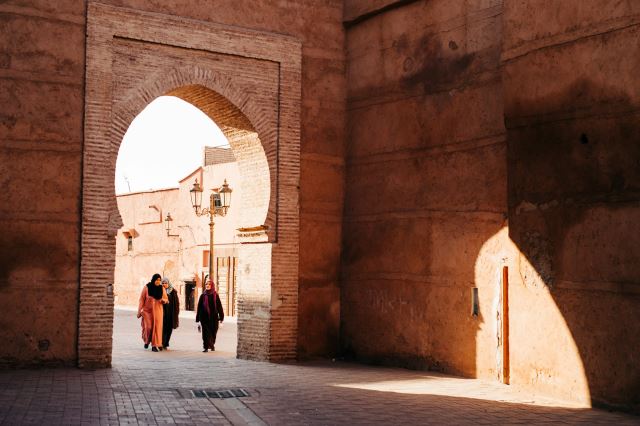


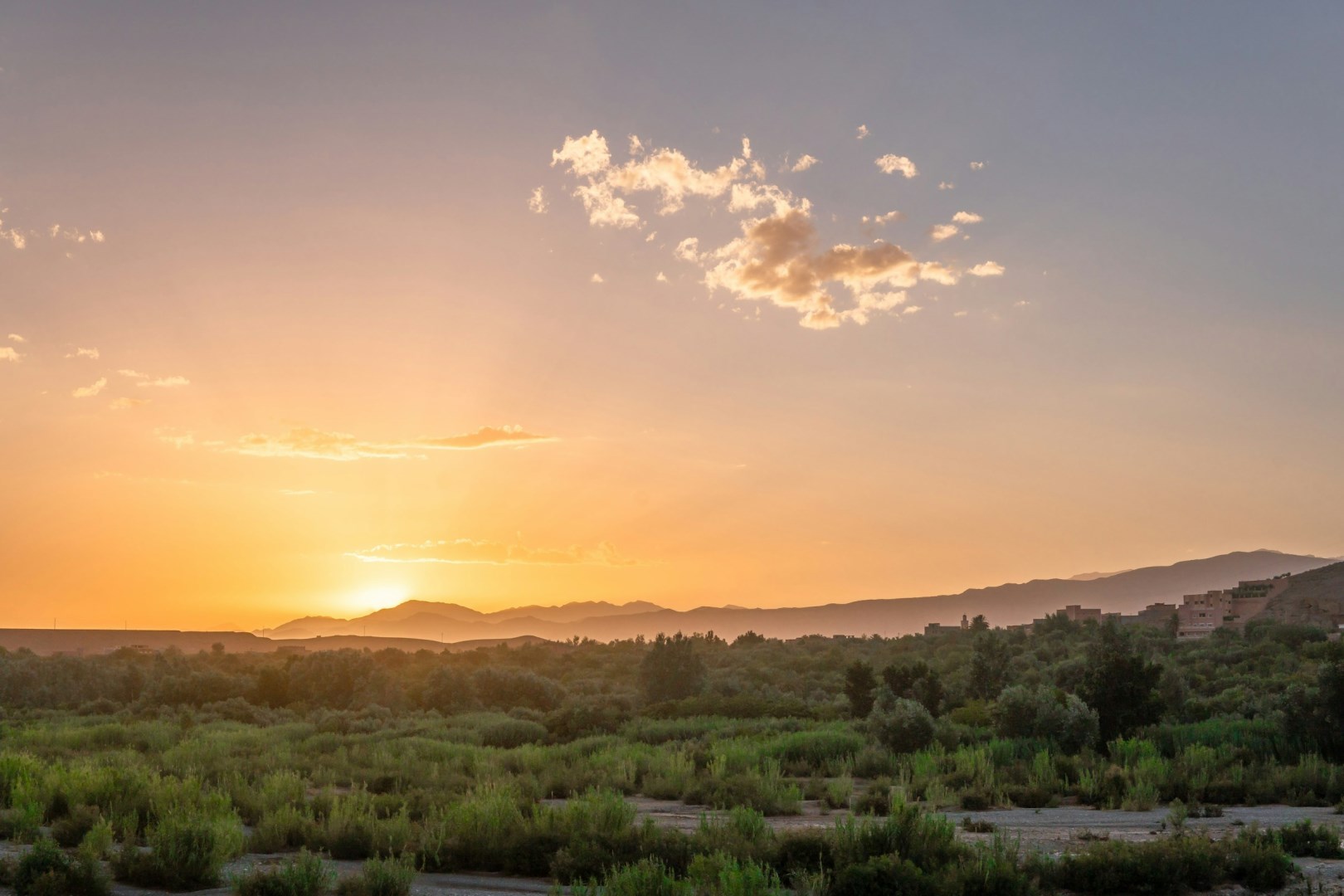

Kalaat M'Gouna is a town in Morocco set in the Valley of Roses between the High Atlas and Jbel Saghro mountain ranges. It lies near the Dadès Valley, where irrigated fields and settlements form green corridors through an otherwise dry, rocky landscape. The town is closely associated with the cultivation of fragrant roses and serves as a commercial center for surrounding villages. Mud-brick kasbahs, palm groves, cultivated plots, and distant mountain ridges characterize the area, while the road through town forms part of an important route across southern Morocco.
Local identity is strongly connected to Amazigh culture and the annual Rose Festival, which celebrates the harvest from the surrounding rose-growing valleys. Roses are cultivated in hedges around agricultural plots, where they can also help separate fields and protect crops. After harvesting, petals are processed into rose water, oils, soaps, creams, and other products sold throughout Kalaat M'Gouna.
The Valley of Roses extends through villages and cultivated land northwest of Kalaat M'Gouna, following waterways toward the village of Bou Tharar. Visitors encounter rose hedges, orchards, traditional earthen buildings, and rugged rock formations along the route. Nearby, the Dadès Valley is known for deep gorges, unusual geological formations, and fortified villages built against mountain slopes. The broader region also provides routes for walking and trekking through highland landscapes. Seasonal changes are particularly noticeable around the cultivated valleys, where irrigated gardens contrast sharply with the dry mountains and plateaus surrounding them.
Food around Kalaat M'Gouna follows the traditions of southern Moroccan and Amazigh cooking. Tagines may combine lamb or chicken with vegetables, dried fruit, olives, and spices, while couscous, bread, dates, and mint tea are common across the region. Rose products provide a more distinctive local detail: rose water is used in some sweets and drinks, while bottles of distilled floral water are widely sold in shops and cooperatives. The rose harvest is largely carried out by hand, linking the town’s best-known product directly to small-scale agriculture and the work of families in surrounding villages.
Other Popular Destinations in Morocco