





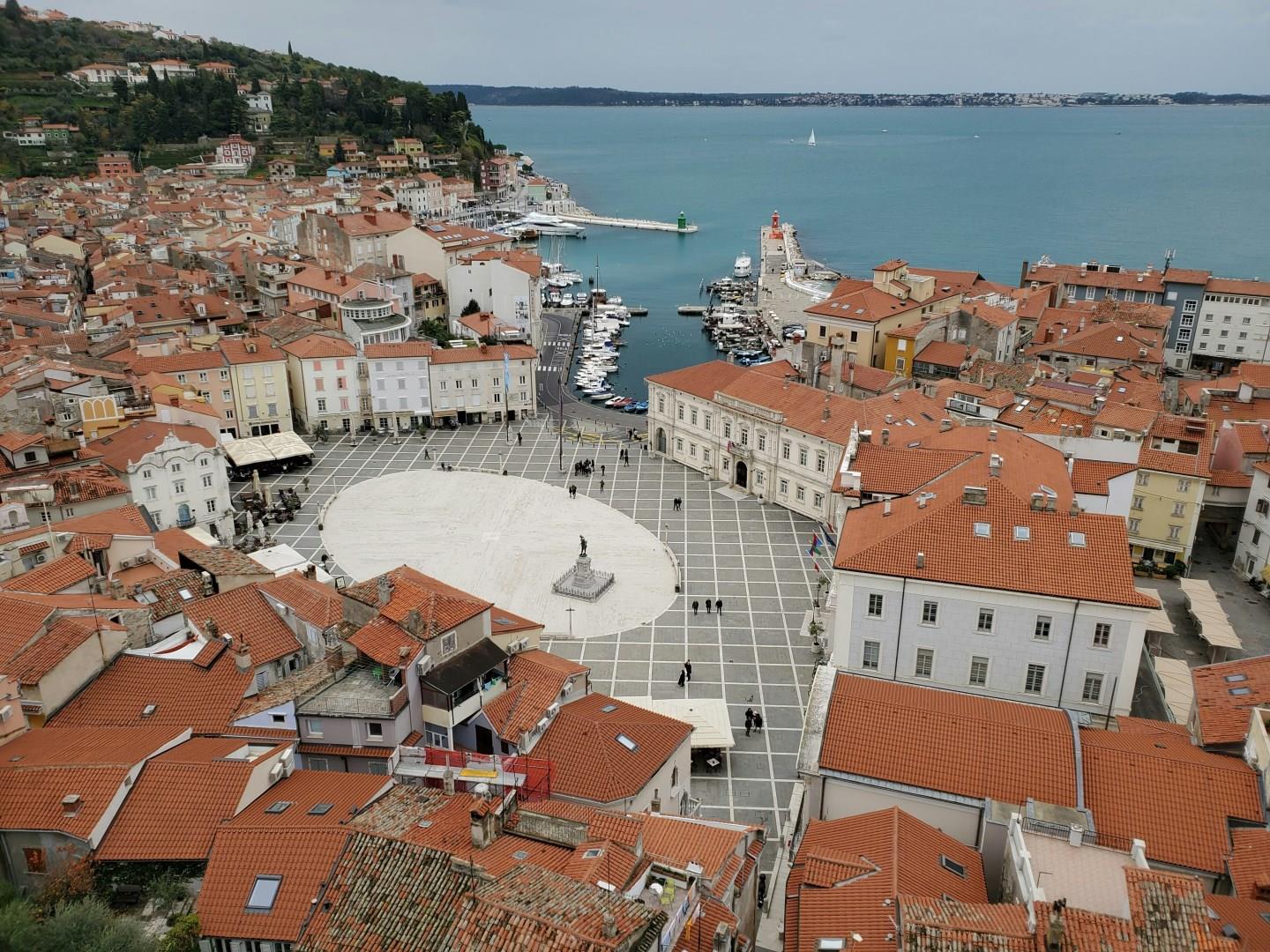
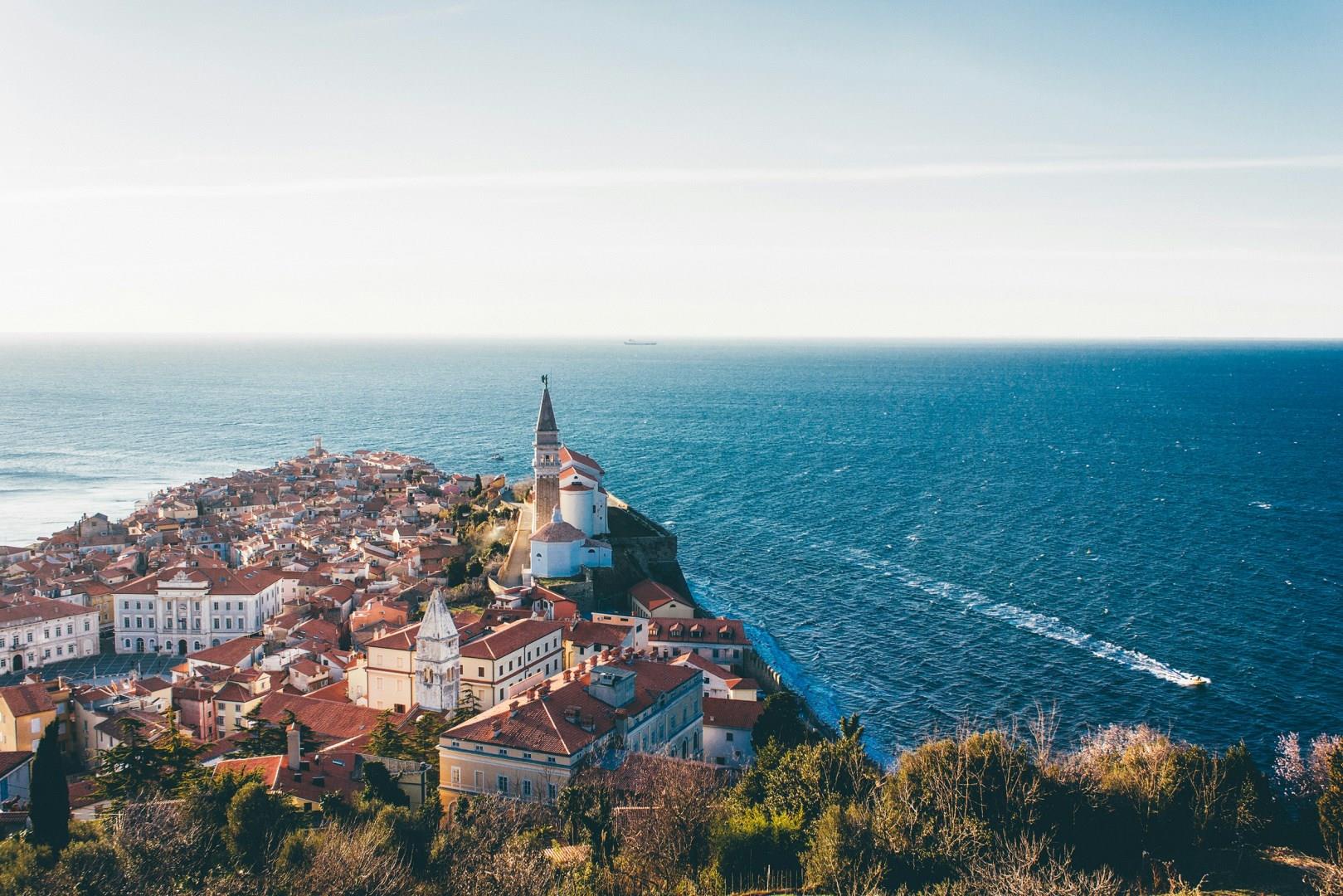
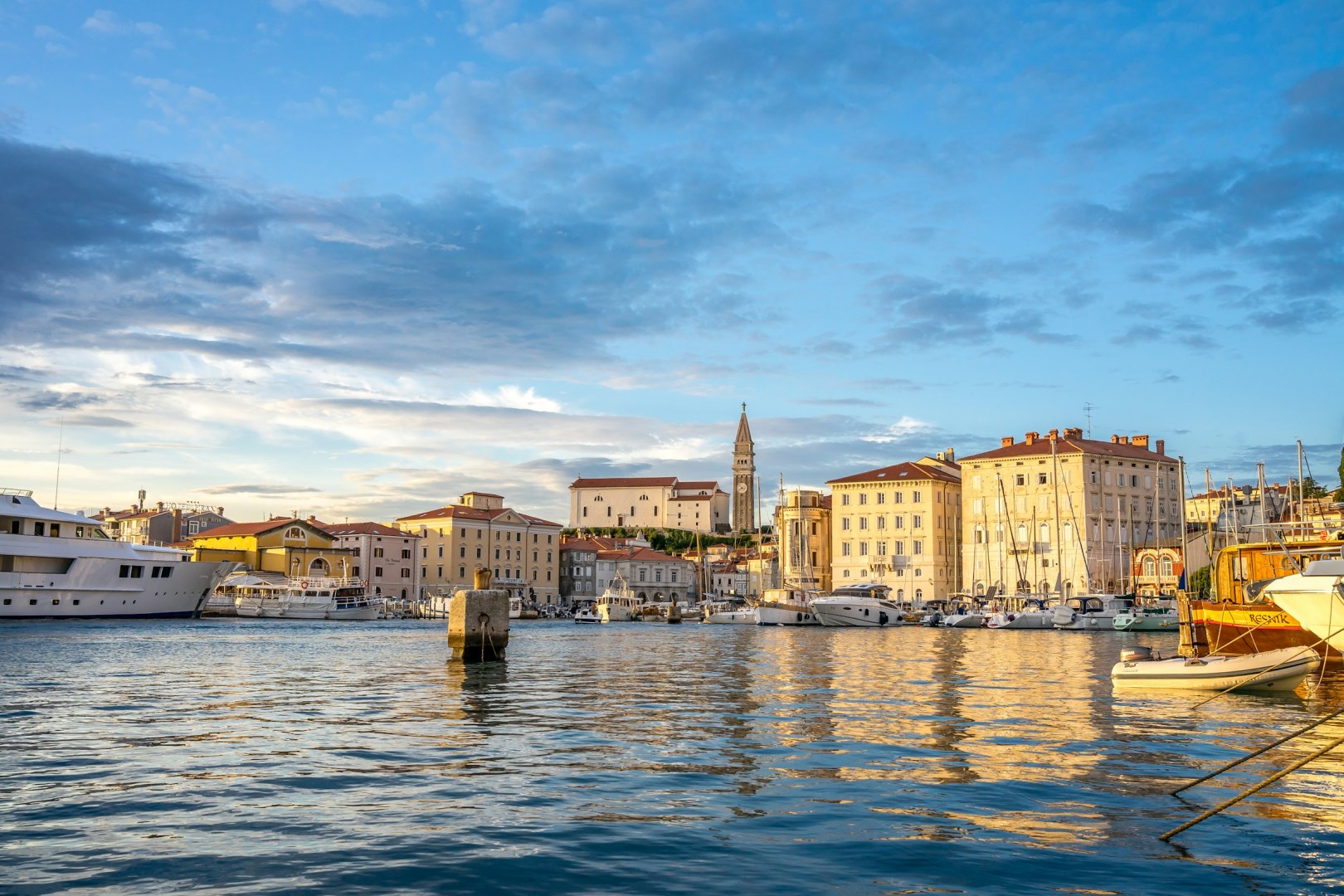
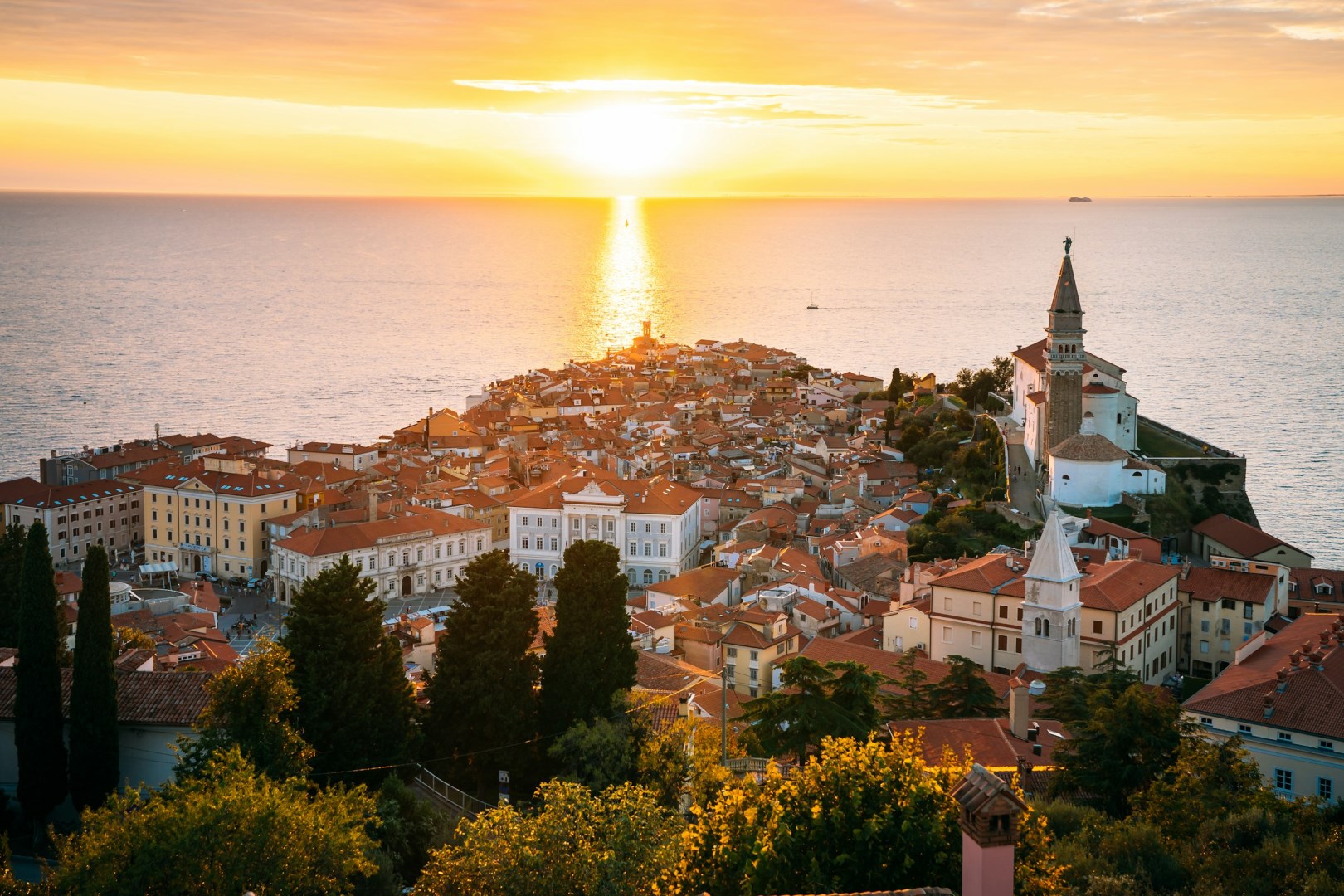
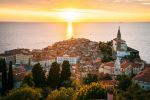
Piran, nestled along Slovenia's picturesque Adriatic coast, is a charming city that embodies a blend of medieval allure and seaside beauty. With its narrow, winding streets and well-preserved Venetian architecture, Piran offers a delightful glimpse into its rich history. The city's centerpiece is the stunning Tartini Square, named after the famous violinist Giuseppe Tartini, who was born here. The square is flanked by beautiful historical buildings, including the Tartini House and the Church of St. George, which boasts a bell tower offering panoramic views of the city and the sea.
A walk through Piran’s old town reveals its Venetian heritage, with charming piazzas, narrow alleys, and picturesque waterfronts. The Walls of Piran, which date back to the medieval period, offer a pleasant stroll and provide breathtaking views of the Adriatic Sea and the surrounding landscape. The city’s maritime past is also celebrated at the Maritime Museum, which showcases the history of seafaring in the region and the significant role Piran played in maritime trade.
A walk through Piran’s old town reveals its Venetian heritage, with charming piazzas, narrow alleys, and picturesque waterfronts. The Walls of Piran, which date back to the medieval period, offer a pleasant stroll and provide breathtaking views of the Adriatic Sea and the surrounding landscape. The city’s maritime past is also celebrated at the Maritime Museum, which showcases the history of seafaring in the region and the significant role Piran played in maritime trade.
Other Popular Destinations in Slovenia

Ljubljana, Slovenia's charming capital, offers a delightful blend of historical allure and modern vibrancy. Nestled along the Ljubljanica River, this picturesque city invites visitors to explore its well-preserved medieval architecture and vibrant cultural scene. At the heart of Ljubljana is the iconic Ljubljana Castle, perched on a hilltop with stunning panoramic views of the city.

Bled, a small town in northwestern Slovenia, has gained international attention thanks to its lake, which features a lone island topped with a baroque church. Visitors often take traditional wooden boats called pletna to reach the island, where it's customary to ring the church bell and make a wish. According to local legend, the bell was originally cast in memory of a young widow’s lost husband, and today, its chime echoes across the lake as a symbol of devotion and hope.
