South America | Ecuador | Baños de Agua Santa
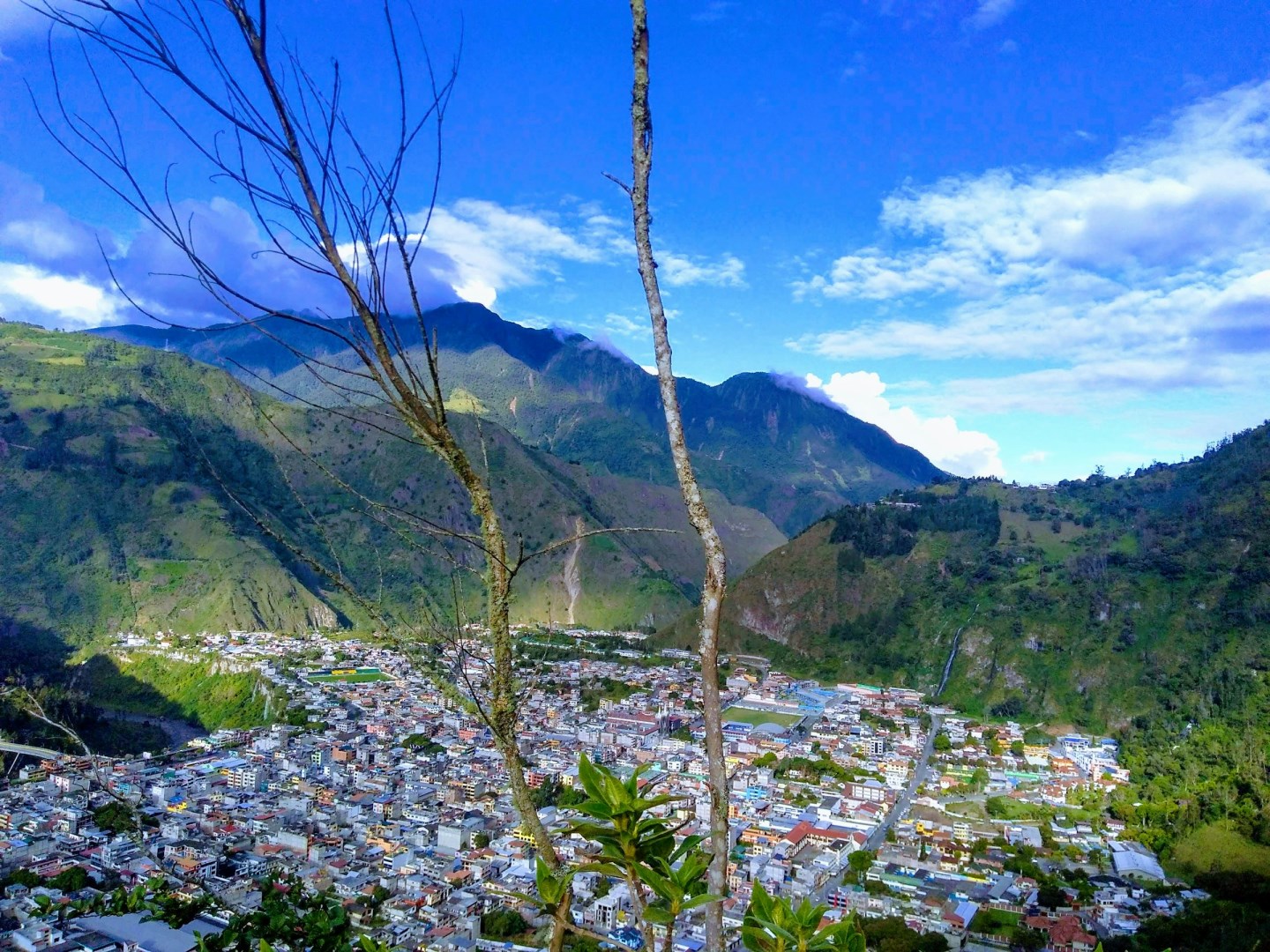
Baños de Agua Santa is a small city in Ecuador's Tungurahua Province, set in a narrow valley on the eastern slopes of the Andes. The city sits beneath the active Tungurahua volcano and is surrounded by steep, green mountains, waterfalls, and forested hills. Its full name refers to the thermal springs that have long been associated with the town. Baños also marks a transition between the high Andes and the warmer Amazon basin, giving the surrounding landscape a mixture of mountain and subtropical vegetation.
Baños has a strong religious identity centered on the Basilica de Nuestra Señora del Agua Santa, where the Virgin of the Holy Water is venerated as the city's patron. Local traditions combine Catholic practices with customs associated with life in the Andes and nearby eastern lowlands. The city is also known for its traditional melcocha, a sweet made from freshly extracted sugarcane juice that is stretched and worked by hand. Small workshops and shops around town continue this practice, making it one of the area's recognizable culinary traditions.
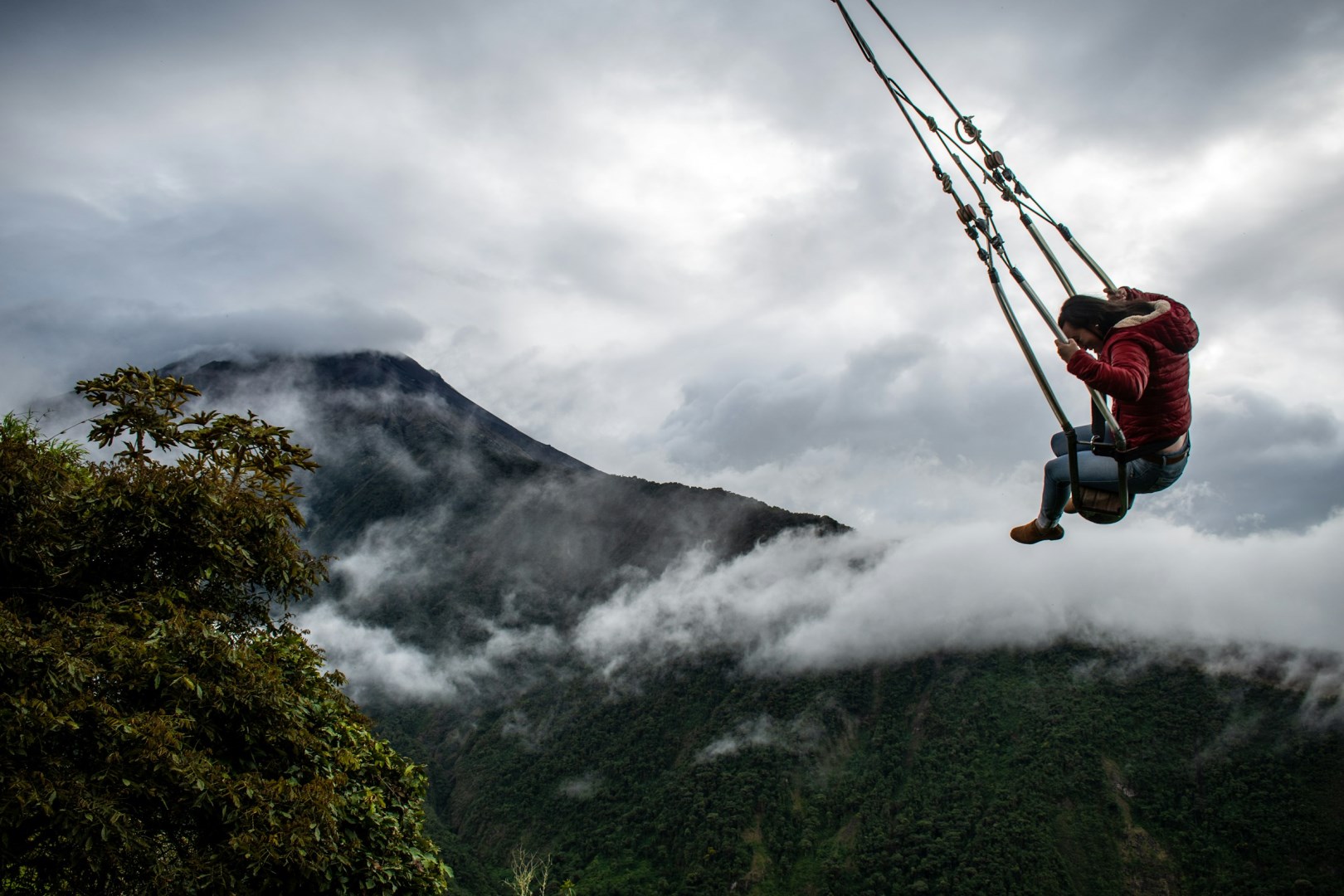
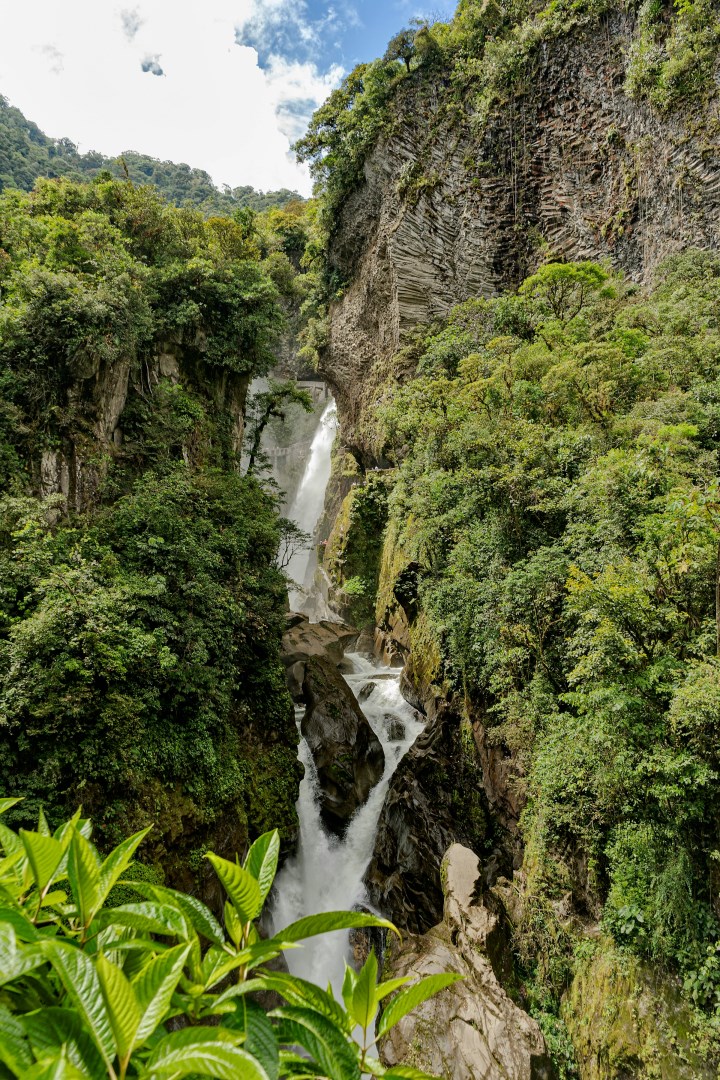
The surrounding landscape is dominated by rivers, ravines, waterfalls, and volcanic terrain. The Ruta de las Cascadas follows the Pastaza River through a series of waterfalls, including Manto de la Novia and San Pedro, with trails, viewpoints, and suspension bridges along the route. The Pailón del Diablo is another major attraction, where the Pastaza River plunges through a narrow rocky gorge. Baños is also a starting point for hikes and mountain excursions, while the Casa del Árbol viewpoint is known for its elevated swing overlooking the surrounding Andean slopes.
Thermal bathing remains one of Baños's defining activities, with several pools fed by mineral-rich hot springs around the city. Local cuisine combines Ecuadorian staples with foods suited to the surrounding agricultural region. Typical dishes include llapingachos, hornado, fritada, and locro de papas, while melcocha is particularly associated with Baños. Sugarcane is widely cultivated in the warmer areas around the town and is used for panela, juice, and sweets. The city's location between the Andes and Amazon basin also makes fresh tropical fruits and juices common in local markets and restaurants.
Other Popular Destinations in Ecuador