


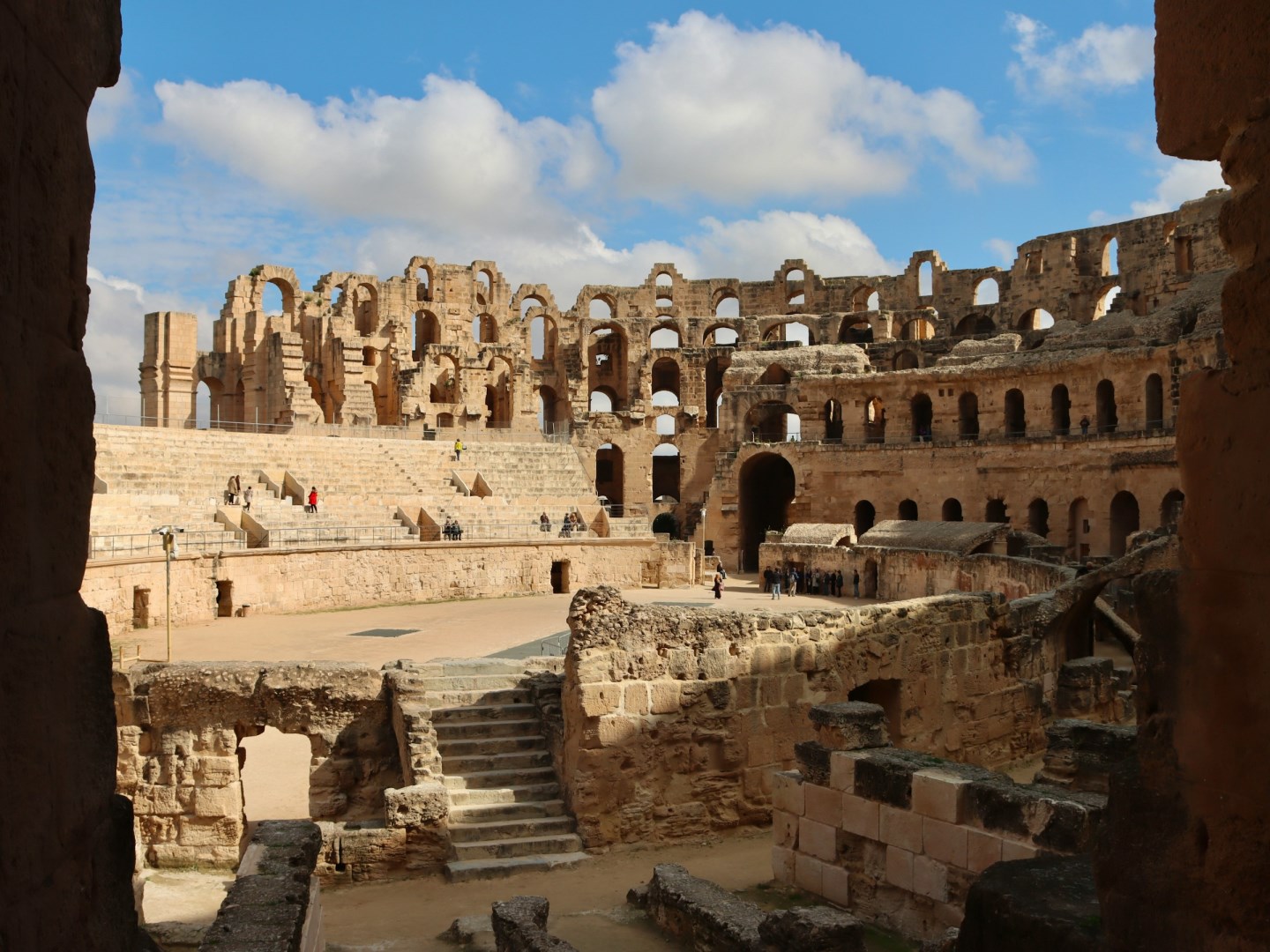
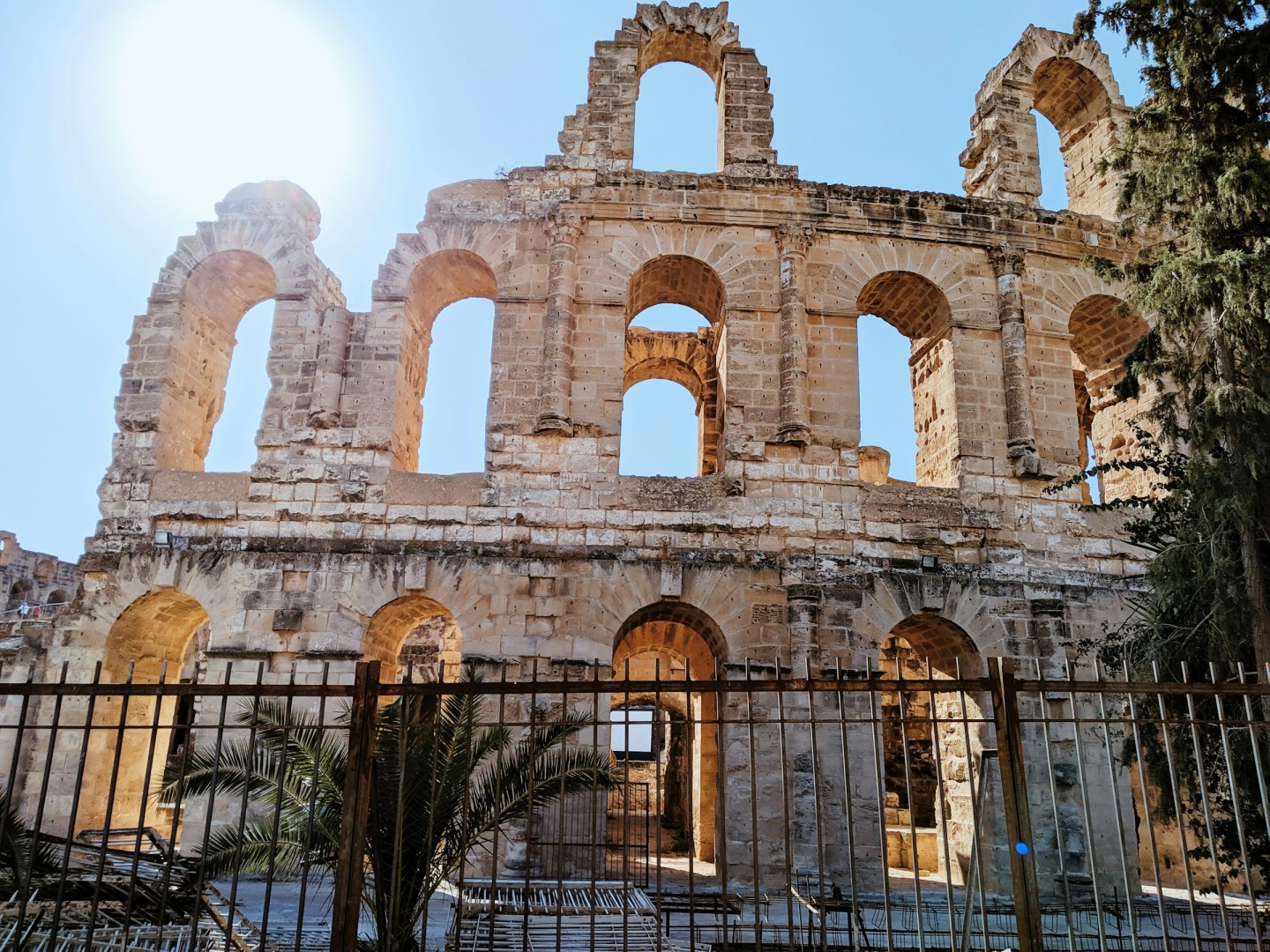
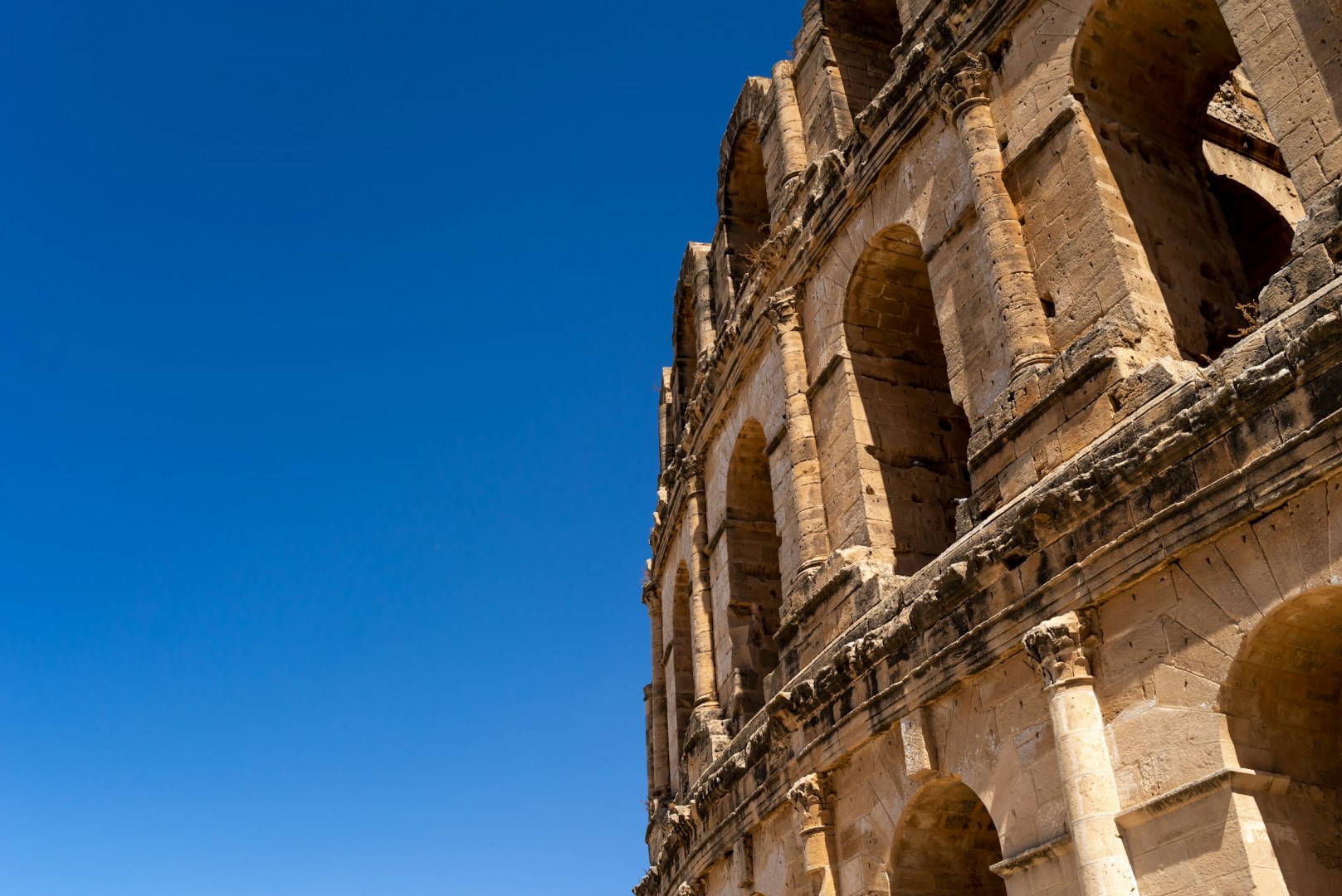
El Jem is a town in central Tunisia best known for its exceptionally preserved Roman amphitheatre, which dominates the surrounding plain. The monument was built as a free-standing structure of stone blocks and could accommodate an estimated 35,000 spectators, making it one of the largest amphitheatres in the Roman world. El Jem developed in an important agricultural region associated with olive cultivation and the production and trade of olive oil. Today, the town combines everyday Tunisian life with an archaeological landscape centered on one of North Africa’s most significant Roman monuments.
The ancient city associated with modern El Jem was known as Thysdrus and became prosperous through agriculture and regional trade. Its wealth supported substantial public buildings, including the amphitheatre, which illustrates the importance of Roman urban culture in North Africa. The monument retains its tiered seating structure, arena, underground passages, and much of its three-level arcade facade. These features provide a clear view of how large public spectacles were organized and how Roman architectural techniques were adapted to the flat landscape of central Tunisia.
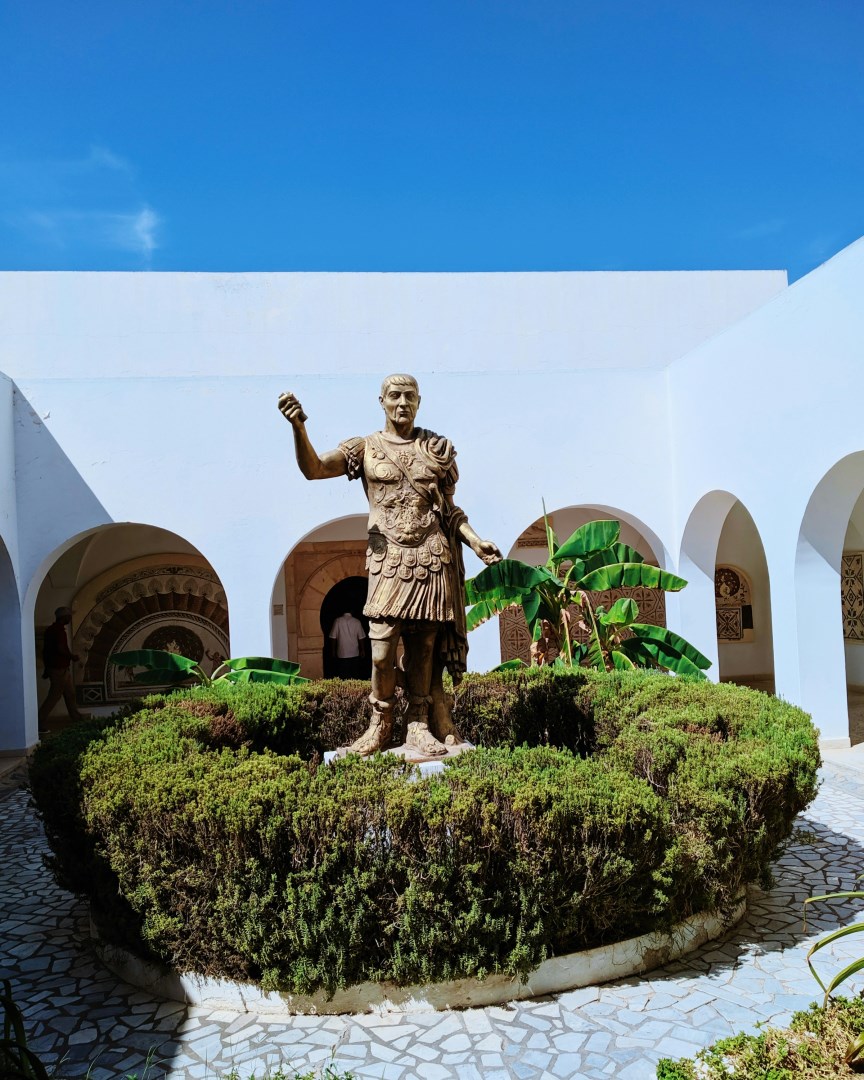
The Amphitheatre of El Jem is the town’s principal landmark and is recognized by UNESCO as a World Heritage property. Visitors can walk through the arena, explore the underground passages, and climb through sections of the seating areas for views across the town. The surrounding archaeological area has also produced important mosaics and other remains connected with ancient domestic life. The nearby Archaeological Museum of El Jem contains Roman mosaics and artifacts from the region, helping place the amphitheatre within the broader setting of ancient Thysdrus and its prosperous agricultural economy.
Olive cultivation remains closely associated with the landscape around El Jem, continuing a rural tradition that has shaped the region's economy and food culture. Tunisian meals commonly feature olive oil alongside bread, couscous, salads, vegetables, and grilled meats or fish. The town is also associated with mosaics featuring geometric designs, animals, and scenes from Roman daily life, reflecting the artistic wealth of ancient households in the area. A distinctive feature of El Jem is the contrast between its modest modern townscape and the enormous amphitheatre rising at its center, preserving a direct connection with the region’s Roman past.
Other Popular Destinations in Tunisia