





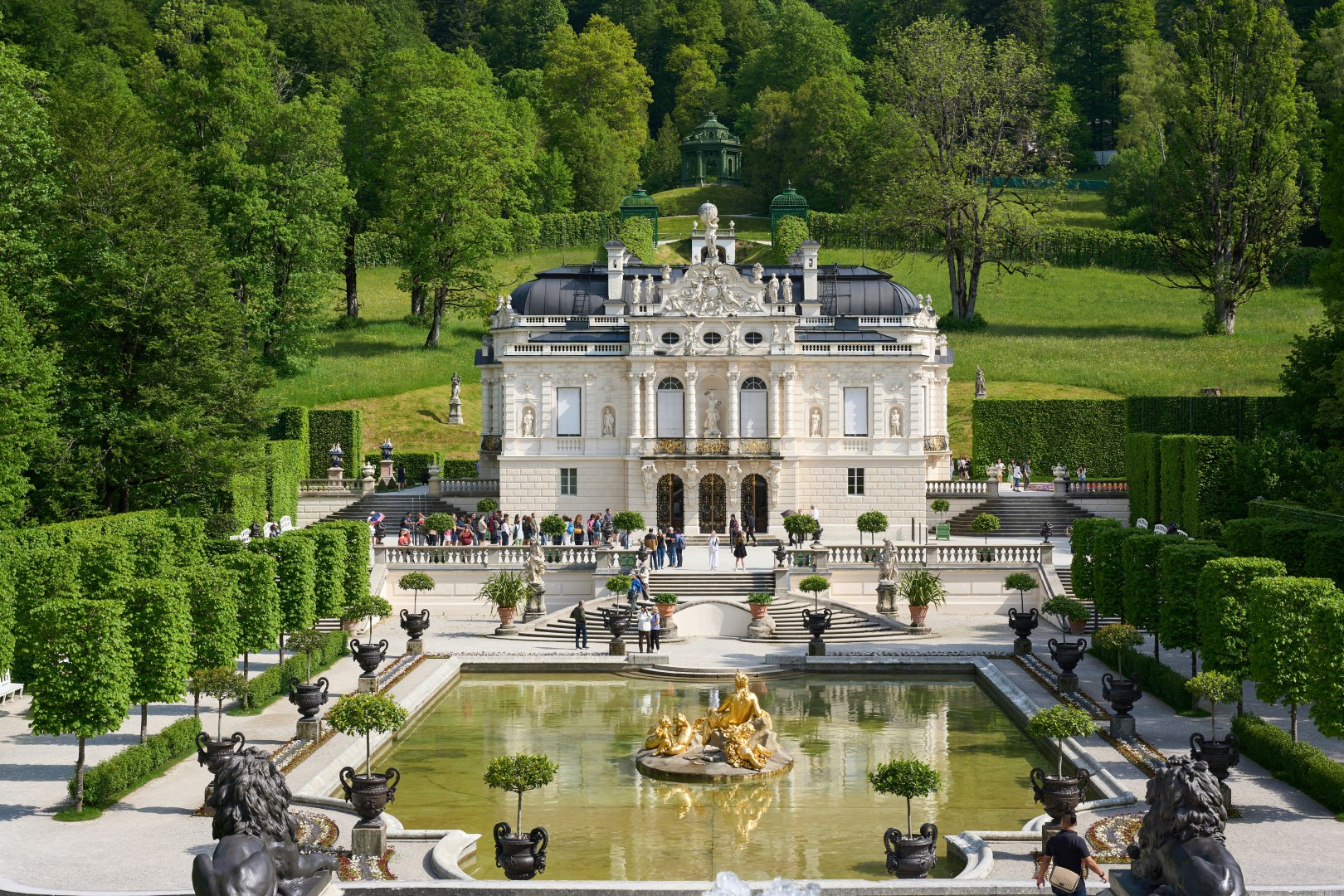
Linderhof is a palace complex in Bavaria, Germany, located in the secluded Graswang Valley near Ettal and surrounded by the mountains and forests of the Ammergau Alps. It is best known as the smallest of King Ludwig II’s royal palaces and the only one completed according to his vision. The palace combines Rococo-inspired architecture with elaborate gardens, fountains, and ornamental buildings spread across a carefully designed landscape. Its remote setting and highly decorative appearance distinguish it from many other German palaces, making it one of Bavaria’s most significant historic attractions.
The culture and history of Linderhof are closely linked to King Ludwig II’s fascination with art, opera, and European royal courts. The palace interiors contain gilded decorations, mirrored halls, fine tapestries, and rooms inspired by French court design. Throughout the estate, visitors encounter structures that reflect Ludwig’s interest in mythology and the works of composer Richard Wagner. Buildings such as the Moorish Kiosk, Moroccan House, and Hunding’s Hut were created as imaginative retreats rather than practical residences. These features reveal the king’s desire to create a private world shaped by literature, music, and theatrical design.
The palace grounds are among the most remarkable in Germany. Formal gardens include terraced lawns, ornamental flower beds, fountains, and long avenues framed by mountain scenery. The Venus Grotto, an artificial cave built beneath a hill, contains an underground lake and was designed as a setting inspired by Wagner’s operas. Visitors can also explore wooded trails leading to decorative pavilions and viewpoints across the valley. The combination of landscaped gardens and natural alpine surroundings creates a setting that feels both carefully planned and deeply connected to the Bavarian countryside.
Food experiences associated with Linderhof are found mainly in nearby villages such as Ettal and Oberammergau, where traditional Bavarian dishes including roast pork, dumplings, pretzels, and regional cheeses are commonly served. Local breweries and guesthouses continue long-standing culinary traditions of Upper Bavaria.
Other Popular Destinations in Germany


