


Canada | British Columbia | Prince George
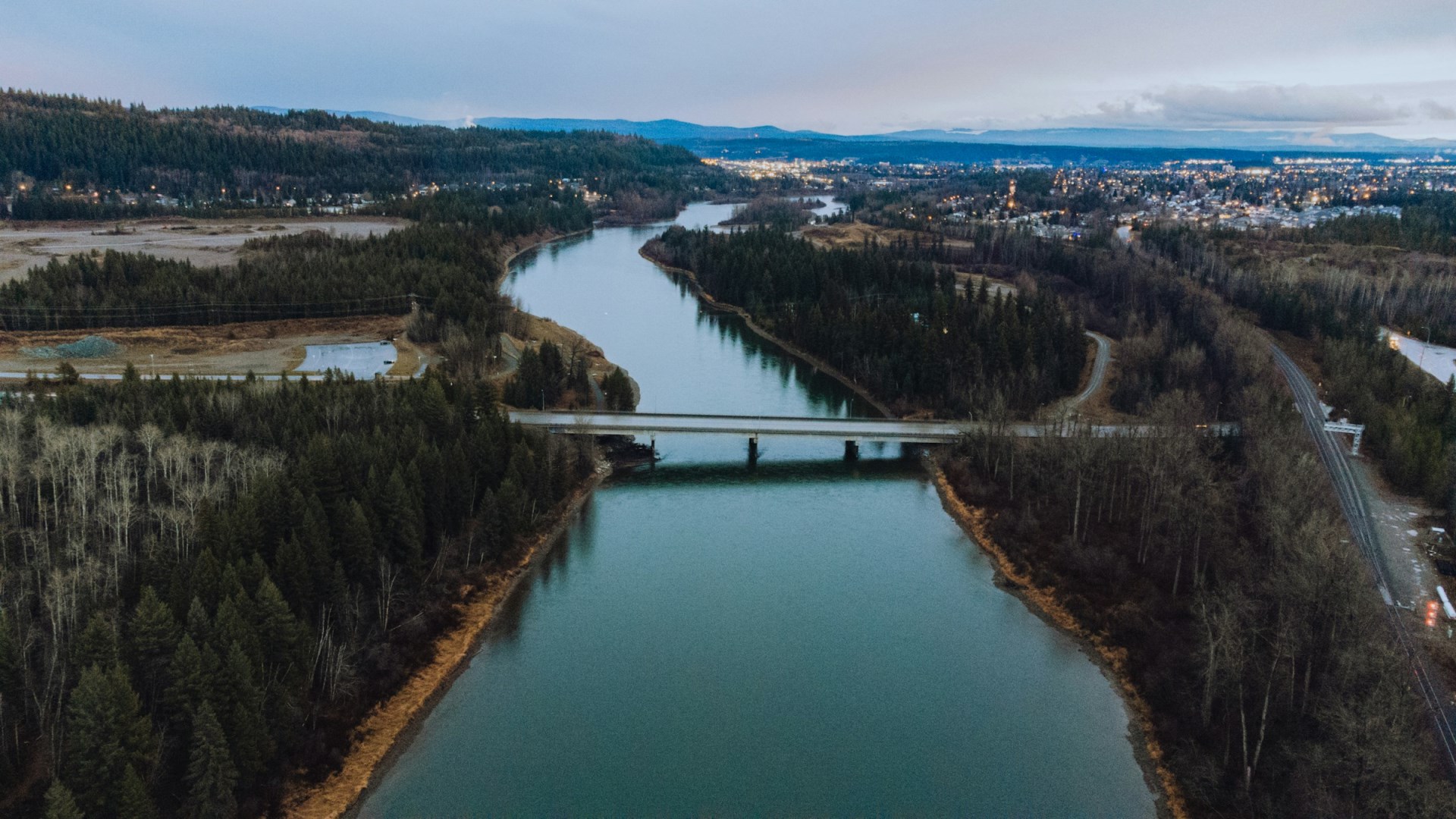
Prince George is a city in north-central British Columbia located where the Nechako and Fraser Rivers meet. Its position between the Interior and northern regions has made it an important transportation, forestry, education, and service centre. The city is surrounded by forests, lakes, rivers, and rolling terrain, with the surrounding landscape reflecting the transition between several ecological zones. Prince George also serves as a regional base for exploring central British Columbia, with nearby trails, provincial parks, fishing areas, and winter recreation sites. Its combination of urban services and access to northern landscapes gives the city a distinctive regional role.
Prince George is situated on the traditional territory of the Lheidli T’enneh First Nation, whose name refers to the place where the two rivers flow together. The Lheidli T’enneh have longstanding connections to the rivers, forests, plants, and wildlife of the region. The city's later development was influenced by fur trading, railway construction, forestry, and transportation. Lheidli T’enneh Memorial Park occupies a former village site and contains a traditional cemetery. The Exploration Place Museum and Science Centre also presents exhibits about local Indigenous cultures, regional history, natural science, and the development of northern British Columbia.
Lheidli T’enneh Memorial Park follows the Fraser River and contains trails, gardens, picnic areas, and access to the Exploration Place. Cottonwood Island Park provides another riverside setting, with walking trails through forest and a collection of carved wooden sculptures representing local Indigenous themes. The nearby Nechako River and Fraser River offer opportunities for fishing, paddling, and wildlife viewing, while forests around the city support moose, deer, black bears, and many bird species. West of the city, the Ancient Forest/Chun T'oh Whudujut Provincial Park protects an unusual inland temperate rainforest with moss-covered trees and old-growth vegetation.
Prince George's food scene reflects the agricultural and resource-producing regions of central British Columbia, with locally grown produce, berries, meats, baked goods, and craft beverages appearing in restaurants and markets. Salmon and other freshwater fish are also associated with the region's rivers and Indigenous food traditions. Forestry remains an important part of the local economy, and the city's landscape contains numerous reminders of its connection to the forest industry. A distinctive geographical feature is the confluence of the Nechako and Fraser Rivers, which helps explain both the city's Indigenous name and its long-standing importance as a meeting point for travel and trade.
Other Popular Destinations in British Columbia


