
Surrounded by picturesque vineyards and scenic riverbanks, Chalon-sur-Saône, located along the Saône River, is the perfect base to immerse oneself in the heart of Burgundy’s rich heritage and stunning landscapes. From exploring its charming Old Town with medieval landmarks like the St. Vincent Cathedral to discovering the history of photography at the Musée Nicéphore Niépce, the town offers a unique experience for every traveler.
Šiauliai, often referred to as the "City of the Sun" due to its high number of sunny days, is a vibrant gem in northern Lithuania. The city's most iconic landmark is the Hill of Crosses, a profound site of pilgrimage adorned with thousands of crosses placed by visitors over the decades. This unique and moving monument, which has been recognized by UNESCO for its cultural significance, symbolizes the resilience and spirit of the Lithuanian people.
Greenock, located on Scotland’s scenic west coast, is a town steeped in maritime and industrial history, with its historic waterfront and Victorian architecture offering a glimpse into its prosperous past. Once a shipbuilding powerhouse, the town’s legacy is visible in landmarks like James Watt Dock and the Old West Kirk, while the nearby Greenock Cut offers a peaceful escape for walking and cycling, framed by stunning views of rolling hills and the River Clyde.
Salento is the sun-kissed peninsula at the southern tip of Italy’s Puglia region, where history, seaside views, and lively local customs create a destination unlike any other. Its coastline stretches between the Adriatic and Ionian seas, offering beaches with clear, turquoise water and soft sand at places like Torre dell’Orso, Punta Prosciutto, and Porto Cesareo, each with its own character and allure for visitors exploring the shore.
Lincoln, Nebraska, blends college-town spirit with prairie roots, offering a travel experience that’s both laid-back and surprising. As the state capital, Lincoln is home to the stunning Nebraska State Capitol building, an architectural landmark with a 400-foot tower topped by a bronze sower casting seeds over the land. Visitors can tour the building and ride to the 14th floor observation deck for sweeping views of the city and surrounding plains.
Abu Simbel, in southern Egypt near the border with Sudan, is one of the most awe-inspiring archaeological sites of the ancient world. Built during the reign of Pharaoh Ramses II in the 13th century BCE, the twin temples were carved directly into the sandstone cliffs overlooking the Nile. The Great Temple, with its four colossal statues of Ramses II seated at the entrance, was designed not only to honor the pharaoh but also to project his power to neighboring Nubia.
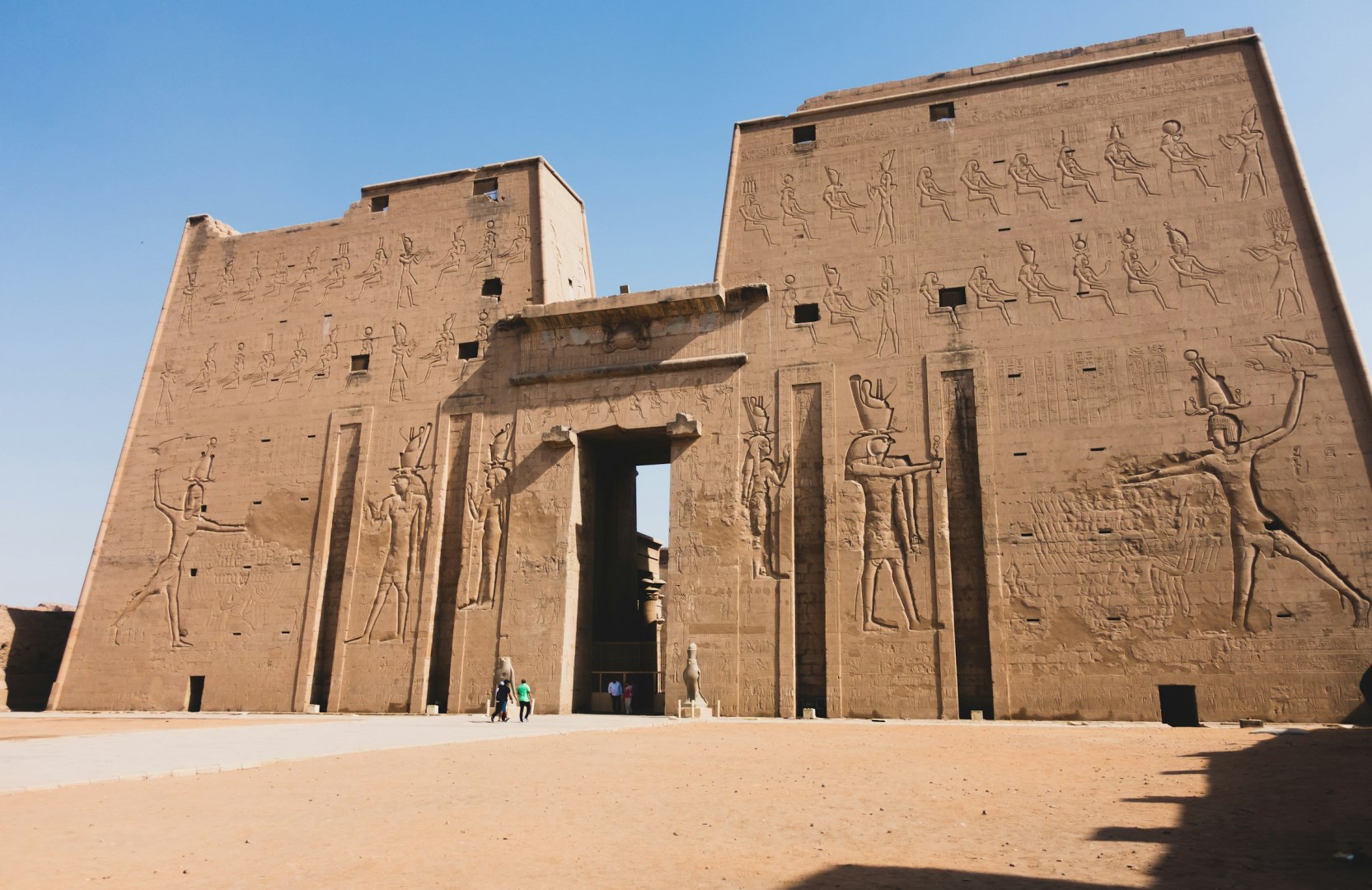
The Temple of Horus at Edfu has a massive entrance pylon covered with sunk relief carvings. This Ptolemaic temple was constructed between 237 and 57 B.C.E.
Once a year for the "Feast of the Beautiful Meeting," Hathor traveled from Dendera to Edfu to visit her husband/consort, Horus. Her arrival was scheduled for the afternoon of the new moon. The statues of the deities remained in the mammisi or birth house until the end of the festival at the full moon. The result of their union was their son Ihy or Horus-Sematawy.
Other Popular Destinations in Egypt
Cairo
Upon the banks of the mighty Nile River, the renowned city of Cairo stands tall as an iconic world capital and a well-preserved relic of antiquity. Immerse yourself in this historically significant city, replete with architectural wonders, mesmerizing artifacts, and sprawling markets humming with energy.
Aswān
Nestled along the tranquil banks of the Nile River, Aswan, Egypt, is a city where ancient history and natural beauty converge in an enchanting landscape. Often referred to as the gateway to Nubia, Aswan is a haven for those seeking to explore Egypt's rich heritage while basking in a serene, almost mystical atmosphere. The city's ancient roots are palpable as you stroll through its vibrant streets, where the echoes of Pharaonic, Roman, and Islamic eras linger in every corner.