


Central Asia | India | Leh
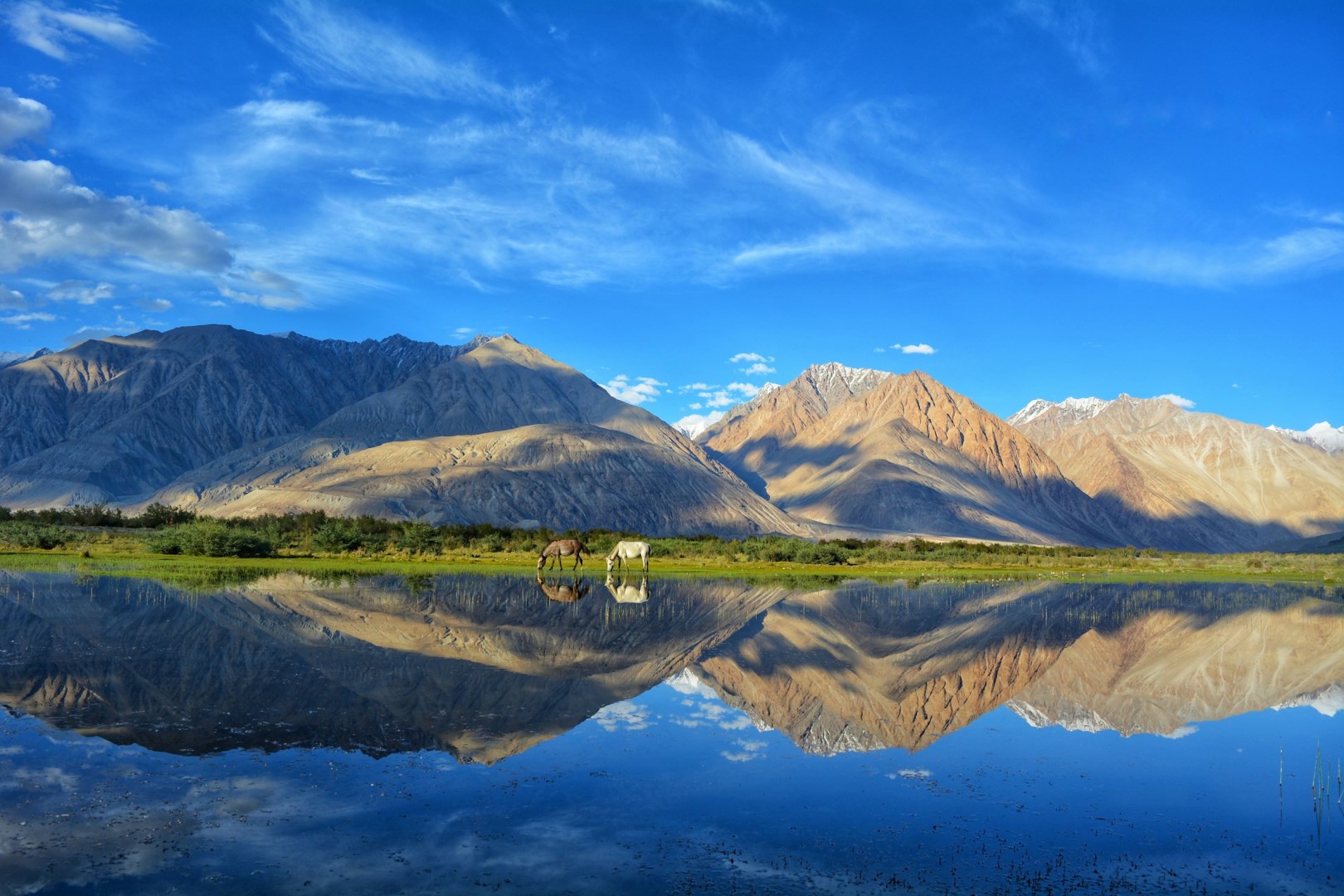

Leh is the principal town of Ladakh, set in a high mountain valley surrounded by the Ladakh Range and shaped by the Indus River system. At an elevation of roughly 3,500 metres, it is known for its dry climate, rugged mountains, clear skies, and compact old town of whitewashed buildings. Leh also serves as a major base for journeys into Nubra Valley, Pangong Lake, and other parts of Ladakh. Its location between major Himalayan ranges has long influenced settlement, trade, agriculture, and the distinctive architecture found throughout the town and nearby villages.
Buddhist traditions remain central to Leh’s cultural identity, alongside Muslim, Hindu, Sikh, and Christian communities. The town is surrounded by monasteries and religious sites, including Spituk Monastery, Sankar Monastery, Thiksey Monastery, and the Shanti Stupa. Leh Palace, built for the Namgyal royal family, overlooks the old town from a hillside and is one of its most recognizable landmarks. Local religious festivals feature masked dances, ritual music, prayers, and offerings, while traditional arts and crafts include wood carving, weaving, metalwork, and the preparation of votive stones and prayer inscriptions.
Leh’s surrounding landscape provides access to some of Ladakh’s most distinctive scenery. Shanti Stupa offers wide views over the town and surrounding mountains, while Tsemo Hill rises above the historic centre with its monastery and fortifications. The Indus Valley extends eastward toward monasteries such as Thiksey and Hemis, while roads from Leh lead toward high mountain passes and remote valleys. The wider district also supports rare wildlife, including snow leopards, Himalayan ibex, blue sheep, and black-necked cranes. Trekking, mountain biking, rafting, and high-altitude excursions are among the activities available around Leh.
Leh’s food reflects its Tibetan and Himalayan connections as well as local agricultural traditions. Thukpa, a noodle soup, and momos are widely available, while skyu, a thick wheat-based dish cooked with vegetables, is a traditional Ladakhi specialty. Barley is an important crop and is used to make tsampa, a roasted flour commonly eaten with tea or other ingredients. Apricots are another notable local product, especially in villages across the Indus Valley. A distinctive feature of Leh is the contrast between its extremely dry mountain surroundings and the green fields, orchards, and poplar-lined settlements sustained by carefully managed irrigation.
Other Popular Destinations in India


