


Central Asia | India | Elephanta Caves
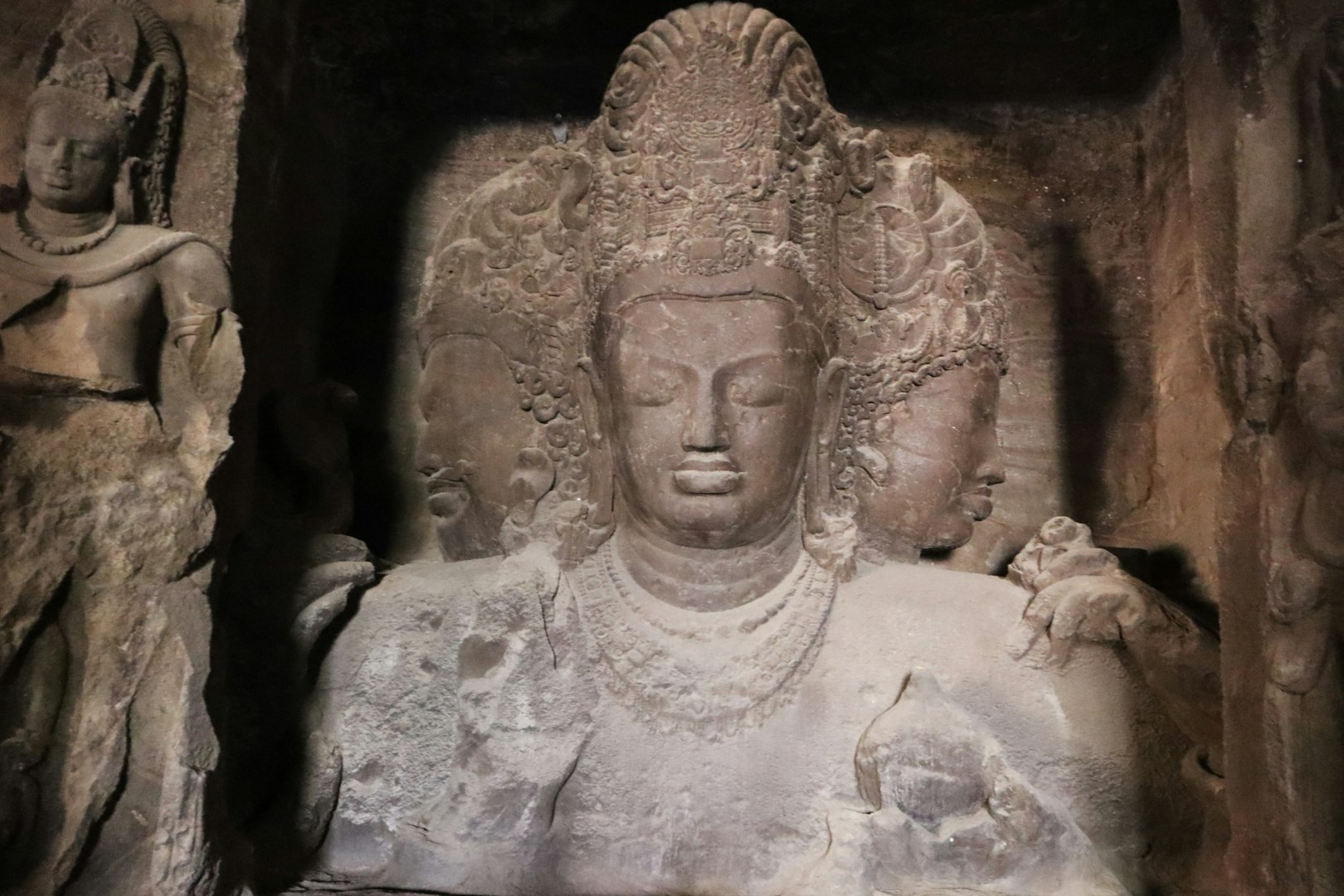
Elephanta Caves are a group of rock-cut temples on Elephanta Island in Mumbai Harbour, Maharashtra, reached by ferry from Mumbai. Carved into basalt cliffs, the caves contain sculptures and architectural features dedicated mainly to Shiva, along with smaller Buddhist remains. The island is covered by forest and rises above the surrounding waters, creating a marked contrast with the dense urban landscape of Mumbai. The cave complex is recognized as an important example of Indian rock-cut architecture and forms part of Mumbai’s cultural heritage.
The caves are closely connected with Shaivite Hindu traditions, and their sculptures present different aspects of Shiva and related religious imagery. The main cave contains the celebrated Trimurti, a monumental three-faced representation of Shiva that stands among other large reliefs. Additional panels depict scenes associated with Shiva, including his marriage to Parvati, his manifestation as Ardhanarishvara, and his victory over the demon Andhaka. The complex also includes a cave associated with Buddhist traditions, reflecting the island’s broader religious history and the coexistence of different traditions within the region.
The Great Cave is the principal attraction, with a large pillared hall leading to a central shrine containing a Shiva linga. Massive sculpted panels line the walls, with the Trimurti serving as the most prominent image. Elephanta Island itself is part of the experience, with wooded paths and steps connecting the jetty to the caves. From the island’s elevated areas, visitors can look across Mumbai Harbour toward the city and surrounding coastline. The Archaeological Survey of India maintains the monuments, while the site’s UNESCO World Heritage status recognizes its artistic and architectural importance.
Food on Elephanta Island is simple and reflects the coastal character of Maharashtra, with snacks, tea, fresh fruit, and basic local meals available around the visitor areas. Mumbai’s wider cuisine provides a much broader selection, including seafood, vada pav, pav bhaji, and regional Maharashtrian dishes. A distinctive detail about the caves is that their modern name comes from a large stone elephant sculpture that once stood near the island’s shore; the sculpture was later moved to Mumbai and is now preserved at the Dr. Bhau Daji Lad Museum. The island’s combination of forest, harbour views, and monumental rock-cut art makes the caves especially notable.
Other Popular Destinations in India


