





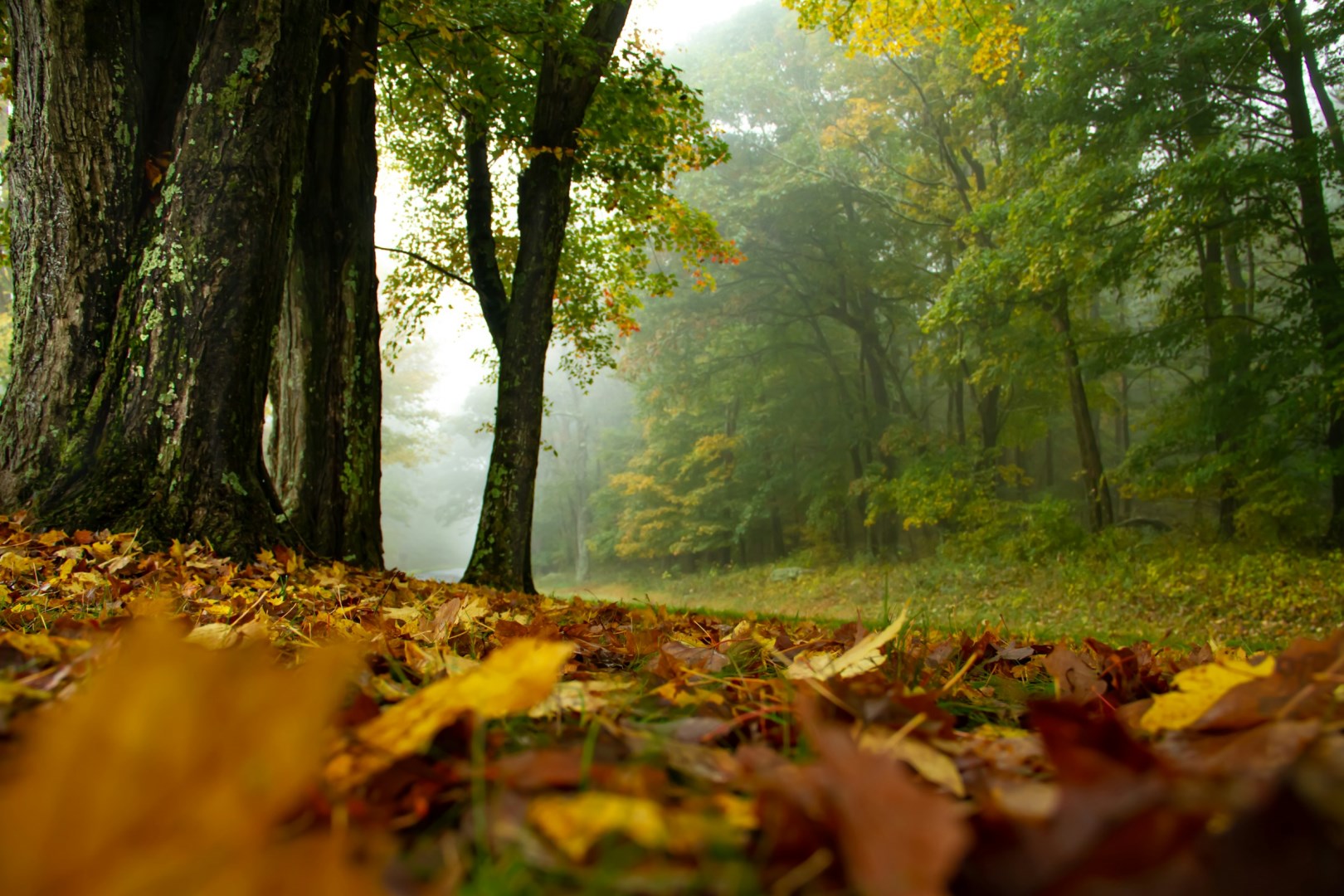
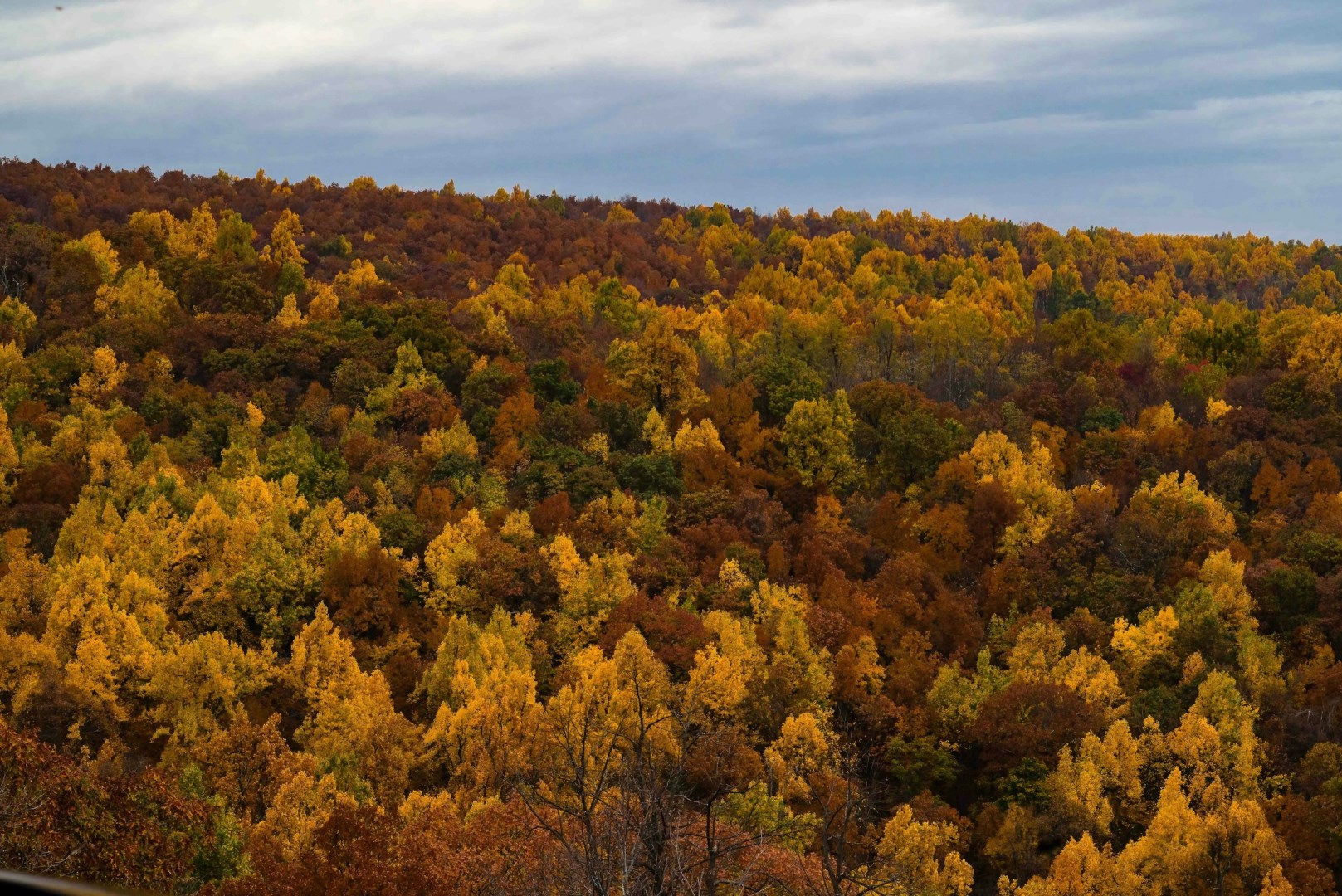
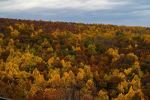
Shenandoah National Park follows the crest and eastern slopes of Virginia’s Blue Ridge Mountains, protecting a long, narrow landscape of forests, ridges, streams, and mountain valleys. The park stretches along Skyline Drive, a scenic road that provides access to numerous overlooks and trailheads. Elevations vary considerably across the park, creating changes in vegetation and climate over relatively short distances. Shenandoah is particularly known for its extensive deciduous forests, which cover much of the mountains and create a landscape of changing color and texture throughout the seasons.
The park’s landscape has been shaped by Indigenous peoples, farming communities, timber operations, and later conservation efforts. Before the park was established, families lived and farmed throughout the Blue Ridge, leaving behind cemeteries, house foundations, stone walls, and old road traces that remain visible in several areas. The Rapidan Camp, once used as a presidential retreat, is an important historic site within the park. These remnants provide evidence of communities that occupied the mountains before much of the land became part of the protected park landscape.
Shenandoah contains more than 500 miles of hiking trails, including a substantial section of the Appalachian Trail. Old Rag Mountain is one of the park’s best-known hiking destinations, with a rocky route leading to broad mountain views. Dark Hollow Falls provides access to one of the park’s many waterfalls, while Big Meadows contains open grassland surrounded by forest and supports deer, birds, and other wildlife. Skyline Drive crosses the length of the park, with numerous overlooks offering views across the Shenandoah Valley to the west and the Virginia Piedmont to the east.
The park’s forests contain oak, hickory, maple, tulip poplar, and other hardwoods, while streams support aquatic habitats and wildlife. Black bears, white-tailed deer, wild turkeys, and numerous bird species are among the animals commonly encountered. Food traditions around Shenandoah reflect the agriculture of the surrounding Shenandoah Valley and Blue Ridge, including apples, cider, Virginia ham, trout, and locally grown produce. A distinctive detail is the park’s concentration of historic mountain communities within its boundaries: remnants of farms, orchards, cemeteries, and old roads remain alongside the natural landscape, making the park a record of both environmental and human history.
