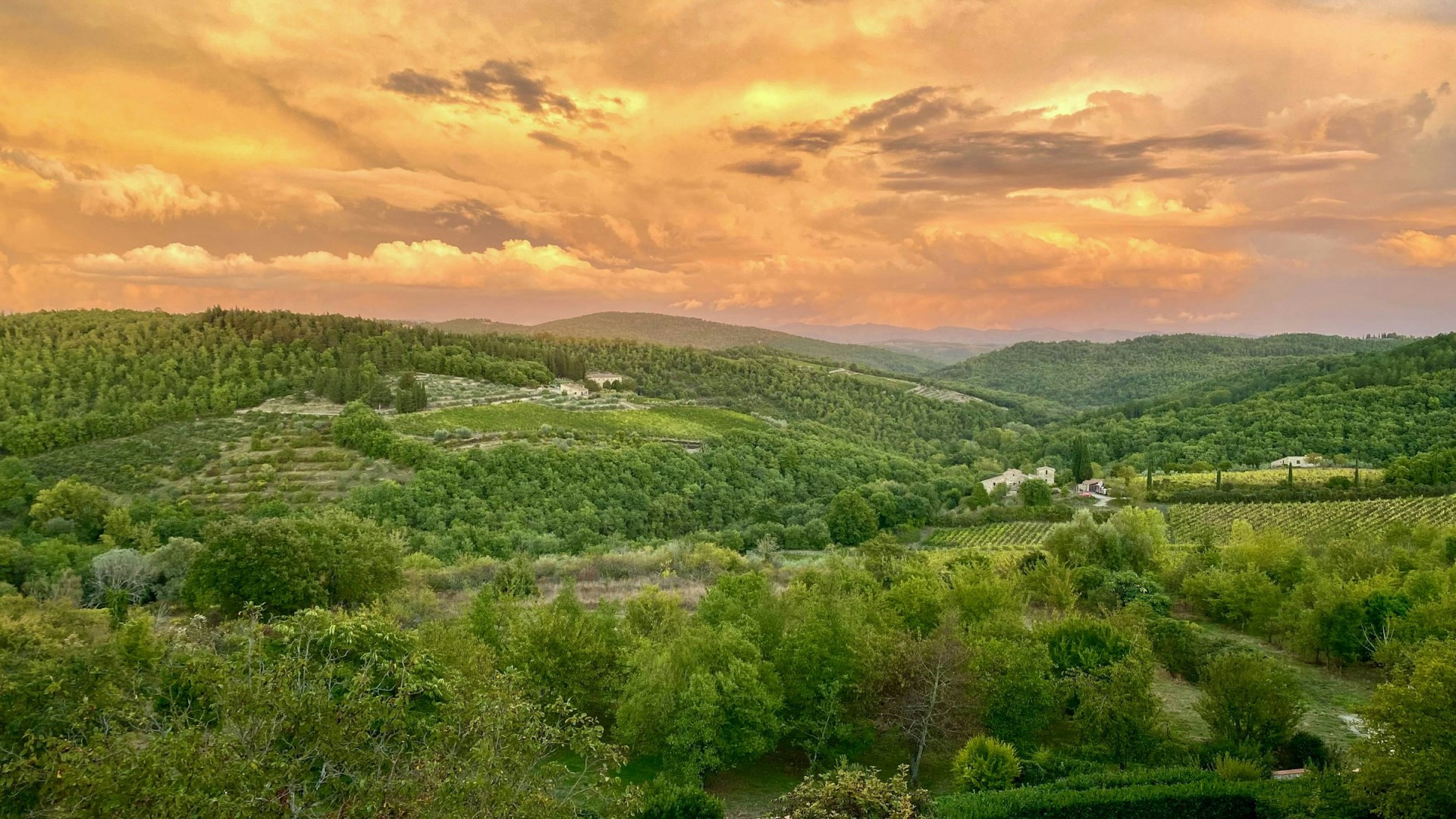
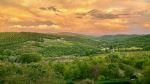
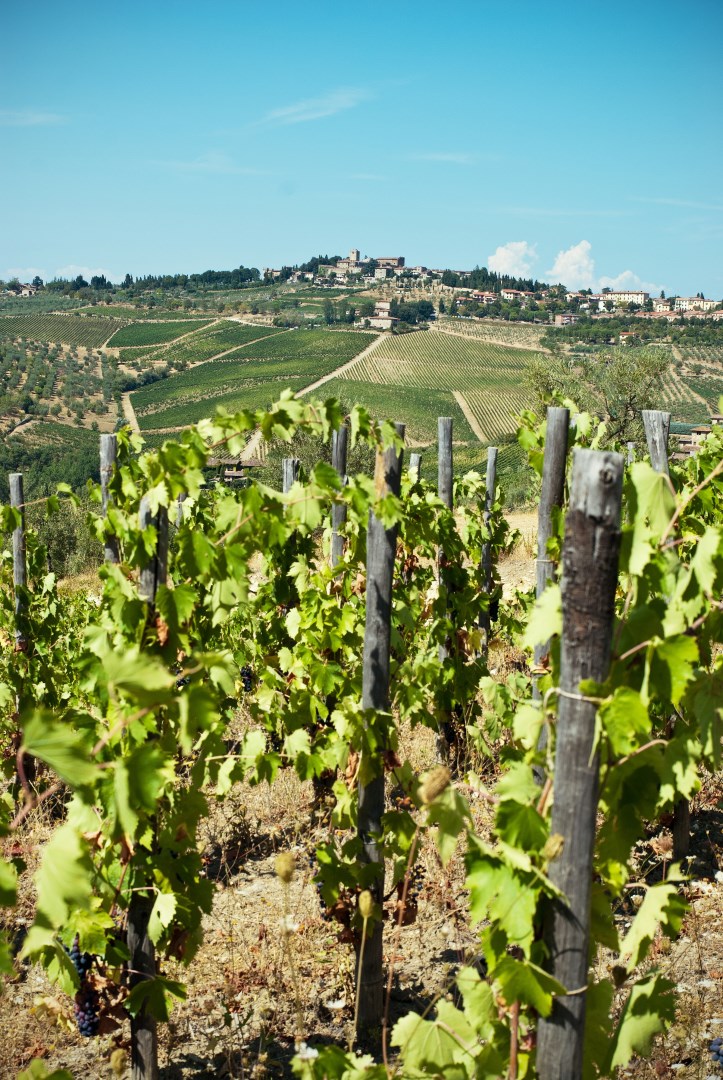
Castellina in Chianti is a hilltop town in Tuscany, set among the vineyards and wooded slopes of the Chianti Classico area between Florence and Siena. Its historic center follows the ridge of a fortified settlement, with stone buildings, narrow streets, and views across the surrounding countryside. The town’s most distinctive structure is the Via delle Volte, a covered passage built into the medieval defensive walls. Castellina remains closely connected with the rural landscape around it, where vineyards, olive groves, cypress trees, and patches of oak woodland form the setting for farms and country estates.
Local identity is closely tied to the traditions of the Chianti countryside and to the town’s former defensive role. The Rocca di Castellina, a prominent stone fortress in the center, now houses the Museo Archeologico del Chianti Senese, which presents archaeological evidence from the surrounding territory. The Church of San Salvatore stands nearby and contains works of religious art associated with the area. Castellina also preserves traces of its Etruscan past, with archaeological sites and artifacts showing that the surrounding hills were settled and cultivated long before the medieval town developed its fortified form.
The town’s elevated position makes it a useful base for exploring the Chianti landscape. The Via delle Volte is one of its best-known features, with sections opening toward views of the countryside beyond the old walls. Outside the center, roads pass through vineyards and olive groves toward small settlements, parish churches, and rural estates. The nearby Montecalvario tumulus is an important archaeological site consisting of several Etruscan chamber tombs. Castellina also lies close to the protected landscape of the Chianti hills, where walking and cycling routes follow quiet country roads and paths between cultivated fields and woodland.
Food and wine are central to Castellina’s local character, with the town lying within the Chianti Classico wine-producing area. Sangiovese is the principal grape associated with these wines, while local cuisine draws on Tuscan staples such as ribollita, panzanella, grilled meats, beans, and dishes made with seasonal vegetables. Olive oil from the surrounding groves is another important ingredient. A distinctive feature of Castellina is how closely its historic architecture remains linked to agricultural production: from the old walls and fortress, the cultivated hills surrounding the town are immediately visible, showing how settlement, vineyards, and rural land have developed together.
Other Popular Destinations in Italy