

Antarctica | Antarctica | Hope Bay
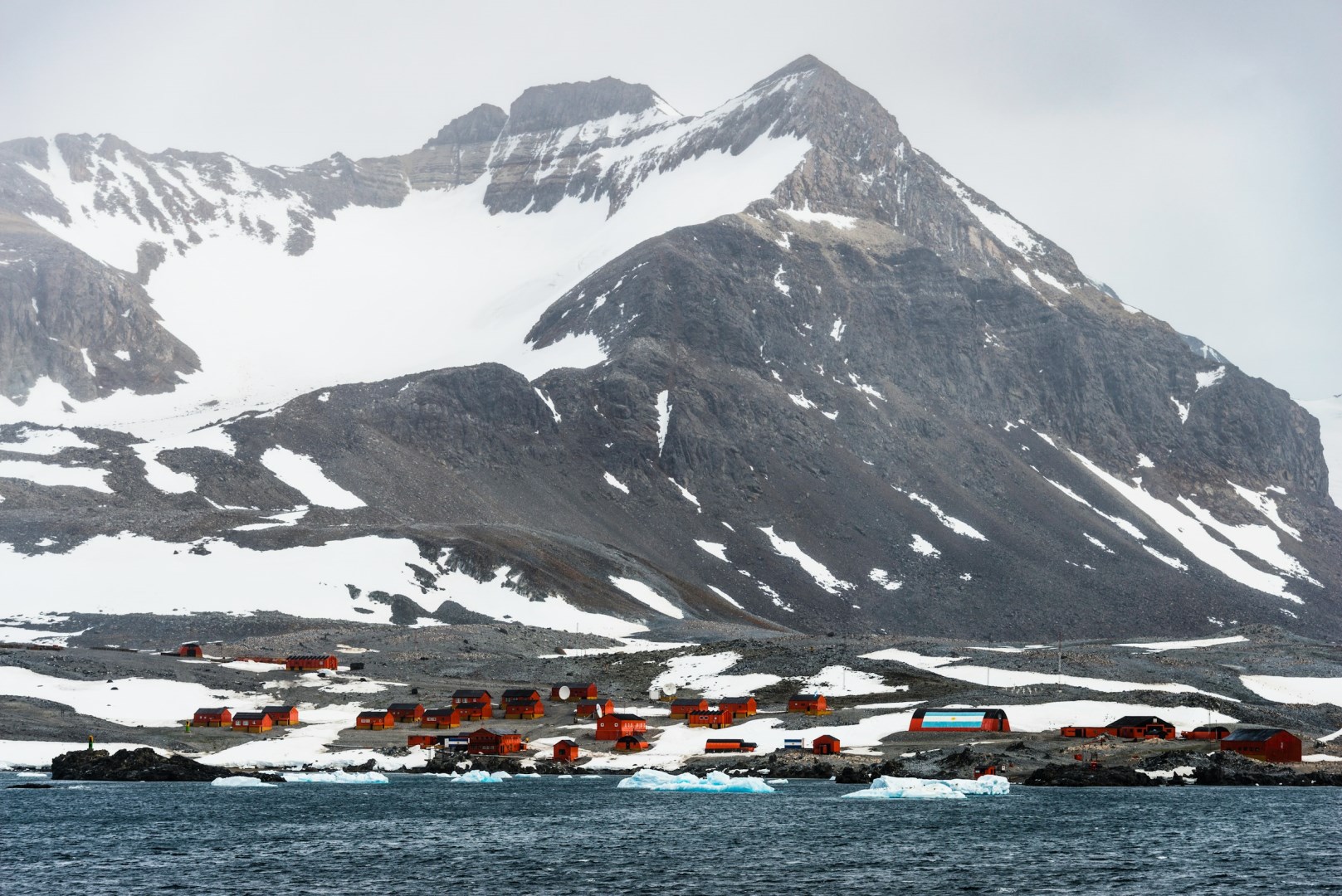
Hope Bay is a sheltered inlet at the northeastern end of the Antarctic Peninsula, where steep mountains, glaciers, and the Southern Ocean meet. The bay opens toward Antarctic Sound and is surrounded by prominent peaks, including Mount Flora, which rises above the western side. Its landscape combines rocky shorelines with extensive snow and ice, while sea ice and icebergs can occupy the water depending on local conditions. Hope Bay is also notable for its relatively accessible coastal terrain and its importance as one of the established sites of human activity on the Antarctic Peninsula.
Hope Bay has a strong connection to Antarctic exploration and scientific work. An Argentine research station, Esperanza Base, stands on the bay’s northern shore and has supported scientific activities in the region. The surrounding area also contains historic structures associated with early Antarctic expeditions, including the remains of a hut connected with the British Graham Land Expedition. Mount Flora is particularly significant to Antarctic science because exposed rock layers there contain fossilized plants, providing evidence of ancient vegetation on the Antarctic Peninsula. These features give Hope Bay both scientific and historical importance.
The bay’s environment supports a variety of Antarctic wildlife. Gentoo penguins breed around the shoreline, while skuas and other seabirds can be seen near the colony. Weddell seals and Antarctic fur seals may also occur in the area, particularly around beaches and sea ice. Mount Flora and the surrounding slopes provide a striking backdrop, with exposed rock contrasting against snowfields and glaciers. The coastline can change considerably with weather, tides, and ice conditions, so access to landing areas varies. Wildlife visits are conducted carefully to avoid disturbing animals and their breeding sites.
One of Hope Bay’s most distinctive features is Mount Flora’s fossil record. The mountain exposes sedimentary rocks containing fossil plant material, including remains that help scientists understand the warmer environments that once existed in the Antarctic Peninsula. The bay is also unusual for the combination of an active research station, historic Antarctic sites, wildlife colonies, and accessible geological features within one coastal setting. Together, these elements make Hope Bay an important location for understanding both Antarctica’s natural history and the human effort to explore and study the continent.
Other Popular Destinations in Antarctica