


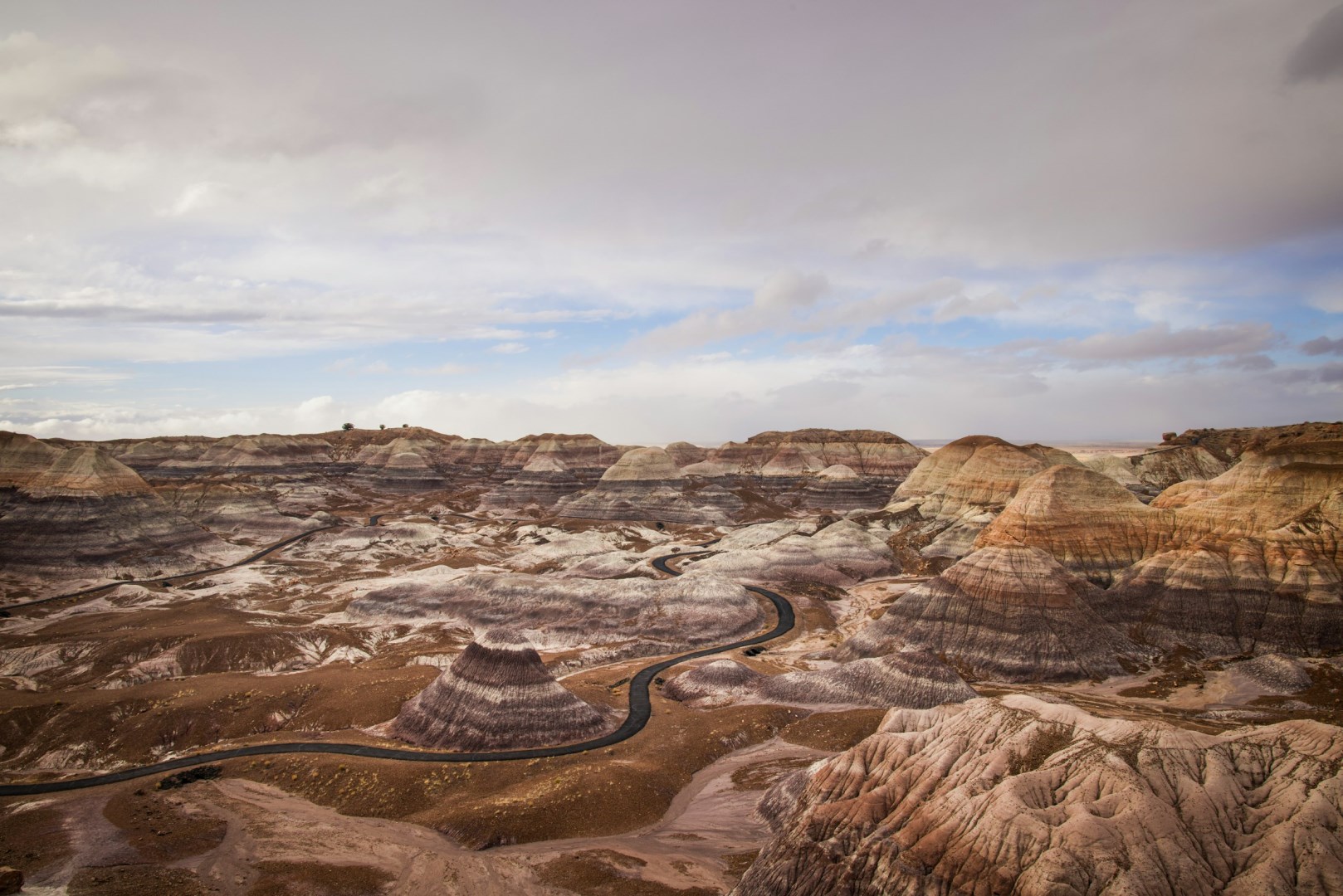
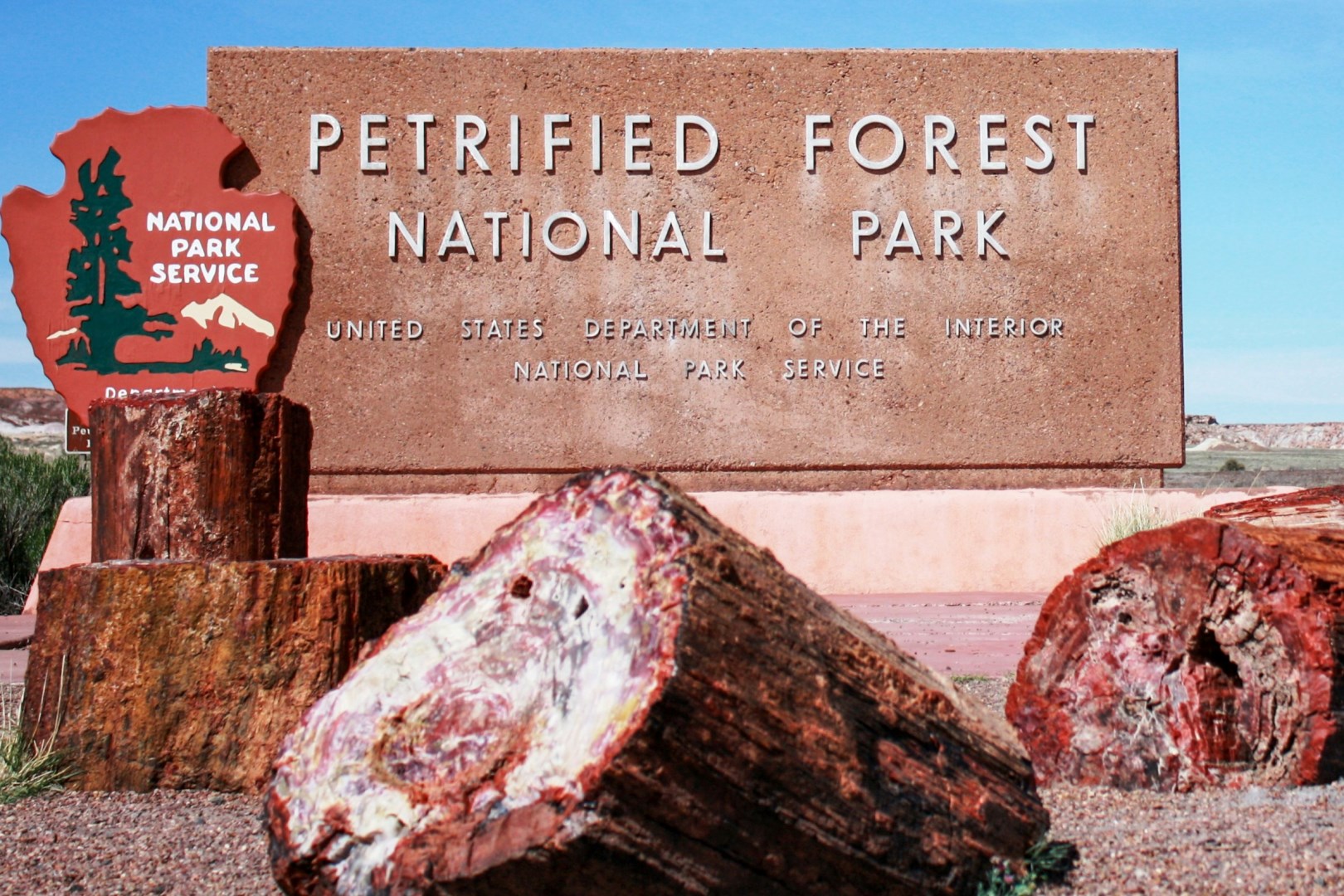
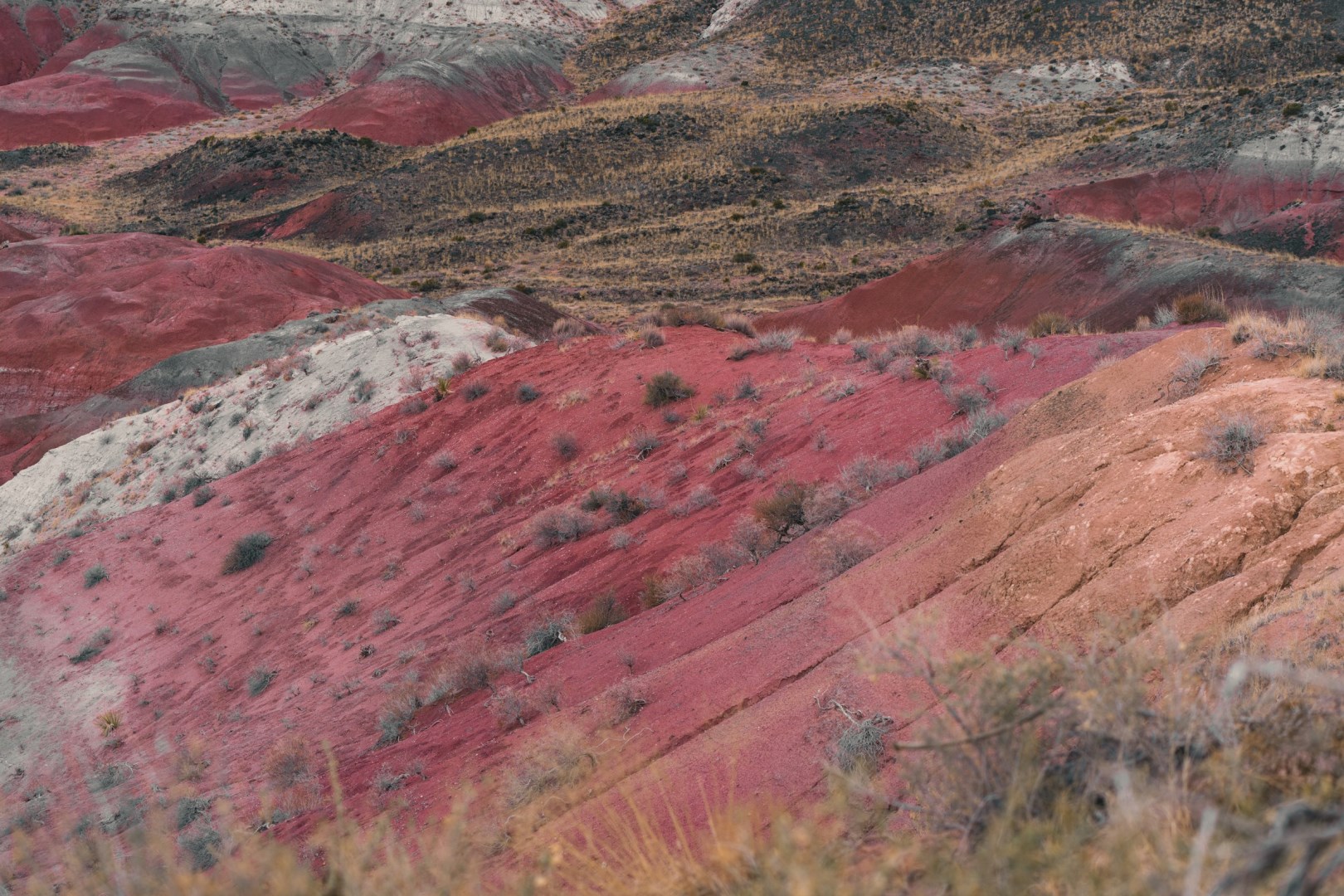
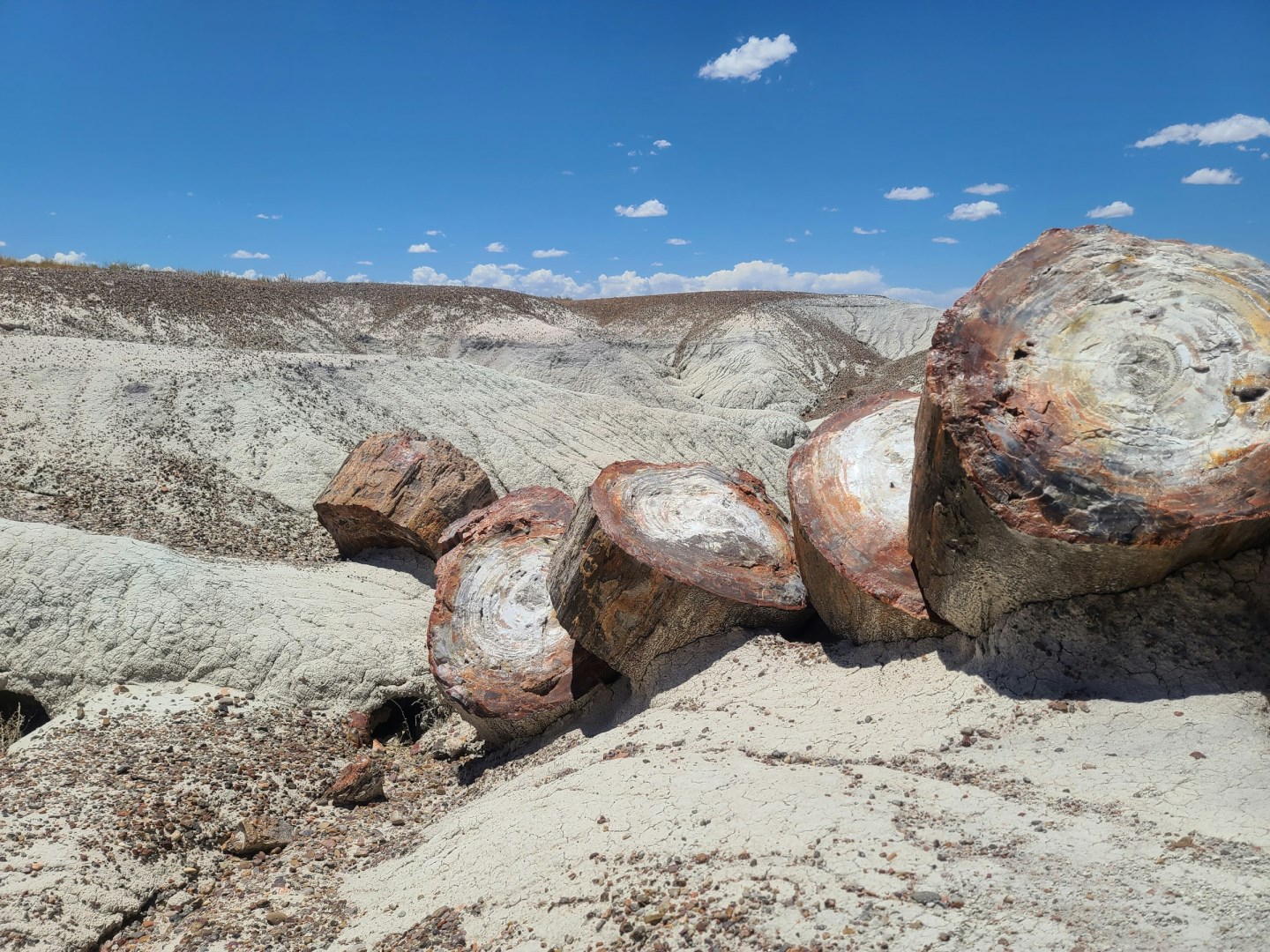
Petrified Forest National Park stretches across the colorful high desert of northeastern Arizona, where grasslands, mesas, badlands, and ancient fossil deposits form an unusual landscape. The park is best known for its extensive petrified wood, much of it preserved from trees that lived in a river environment more than 200 million years ago. Mineral-rich groundwater gradually replaced the wood with silica, producing logs with shades of red, yellow, purple, and brown. The park also contains a large section of the Painted Desert, whose layered hills and broad open spaces reveal the geology of the Colorado Plateau.
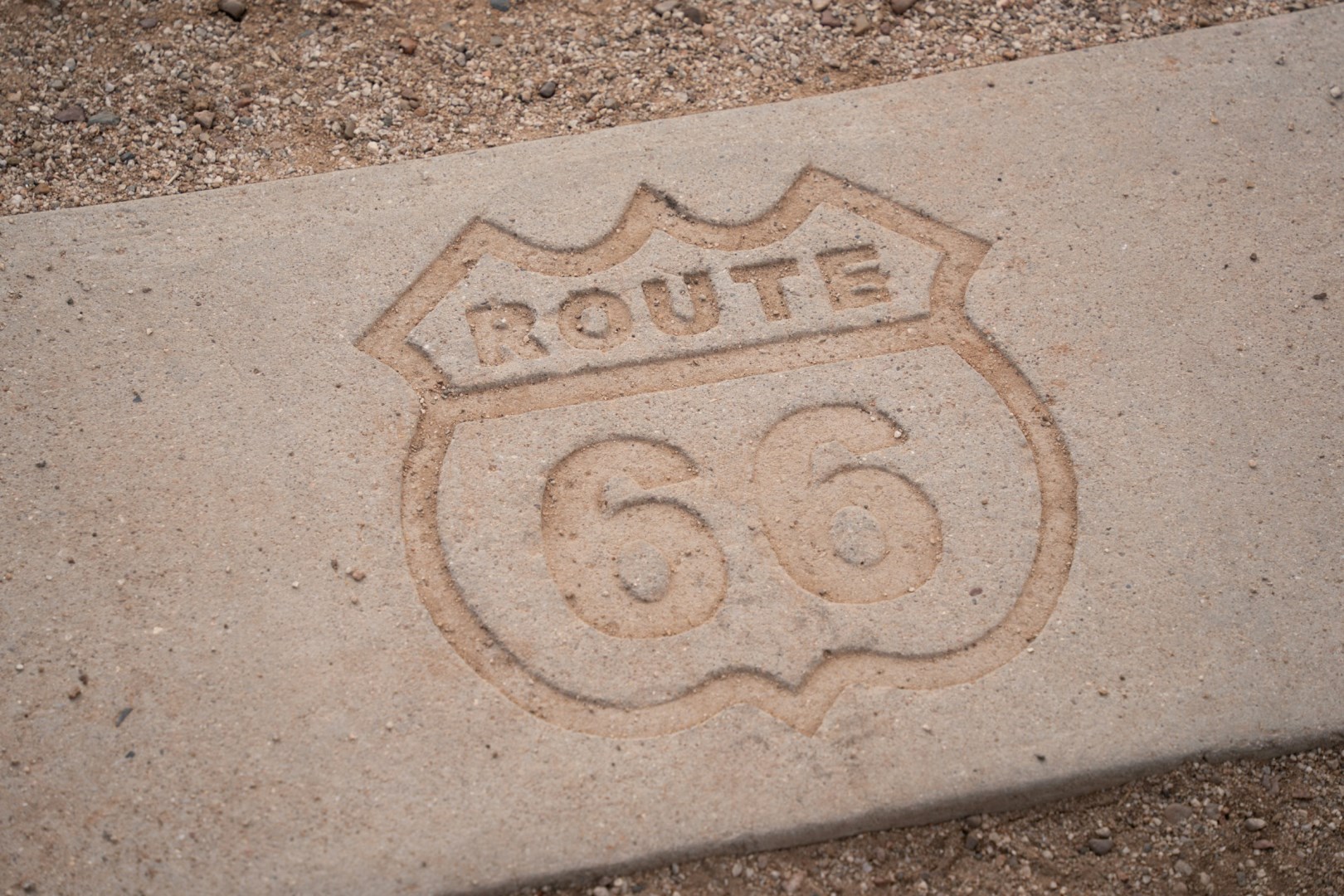
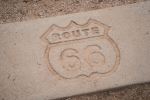
The park preserves more than 13,000 years of human history, with archaeological evidence showing that people lived, traveled, farmed, and traded across the region. Ancestral Puebloan communities built villages and used petrified wood for tools and construction, while later peoples continued to use the landscape and its resources. Puerco Pueblo is one of the most significant archaeological sites, with stone structures and nearby petroglyphs. The Painted Desert Inn, a historic building along the old Route 66 corridor, reflects another chapter of the area's history. The park also protects a segment of historic Route 66, adding a transportation story to its cultural landscape.
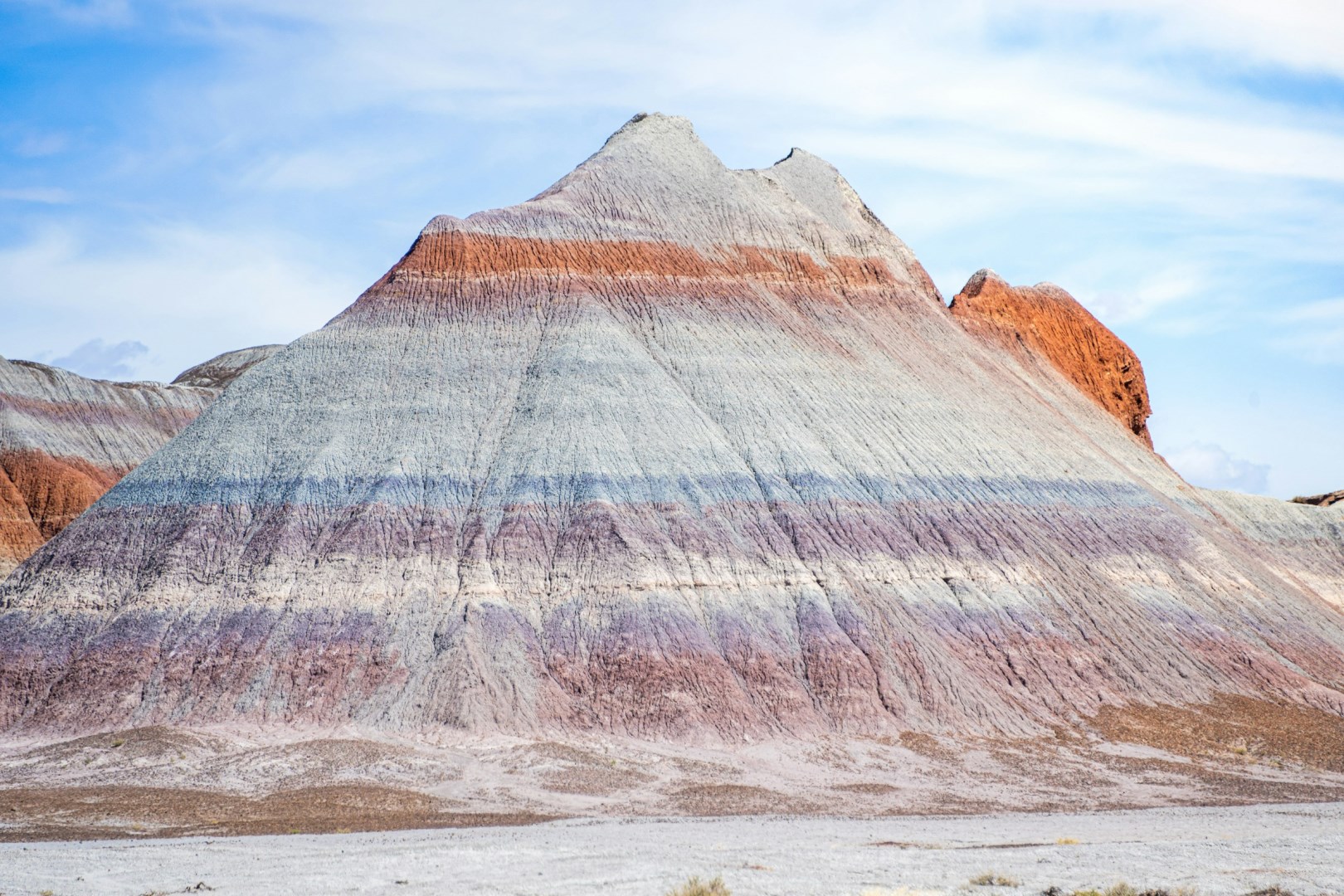
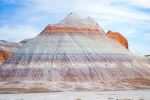
Several areas provide different views of the park's geology and scenery. Rainbow Forest contains dense concentrations of petrified logs and includes trails near the Rainbow Forest Museum. Blue Mesa is known for rounded, multicolored hills formed from layers of the Chinle Formation, while the Painted Desert stretches across the northern part of the park with broad views from overlooks along the main road. Crystal Forest provides a short trail through colorful fossil wood, and the Blue Mesa Trail descends among striped badlands. Wildlife includes pronghorn, mule deer, coyotes, bobcats, kit foxes, and numerous bird species adapted to the grassland environment.
Petrified Forest National Park has no large resident food culture, but visitors can find meals and supplies in nearby communities such as Holbrook, while the park's visitor areas provide places for picnicking. A distinctive feature of the landscape is that the park is actually dominated by shortgrass prairie rather than a conventional desert. Living plants include sagebrush, juniper, cottonwoods, wildflowers, yucca, and grasses adapted to limited moisture. Petrified wood is protected throughout the park, and collecting it is prohibited, allowing the fossil logs to remain in their natural surroundings. The combination of fossils, archaeological sites, grasslands, and Route 66 makes the park unusually diverse.
Learn More About Petrified Forest National Park
Other Popular Destinations in Arizona