



Russia & Northwest Asia | Azerbaijan | Nakhitchevan
Nakhchivan is the capital of the Nakhchivan Autonomous Republic, an exclave of Azerbaijan located between Armenia, Iran, and Türkiye. The city lies in a broad valley surrounded by dry mountains, with the Nakhchivanchay River and irrigated farmland supporting orchards, vineyards, and gardens. Nakhchivan has a long history as a regional center of settlement, trade, and craftsmanship, and its landscape contains a notable concentration of historic monuments. The city also provides access to the wider autonomous republic, where mountain valleys, mineral springs, ancient rock carvings, fortresses, and religious sites form a varied cultural and natural landscape.
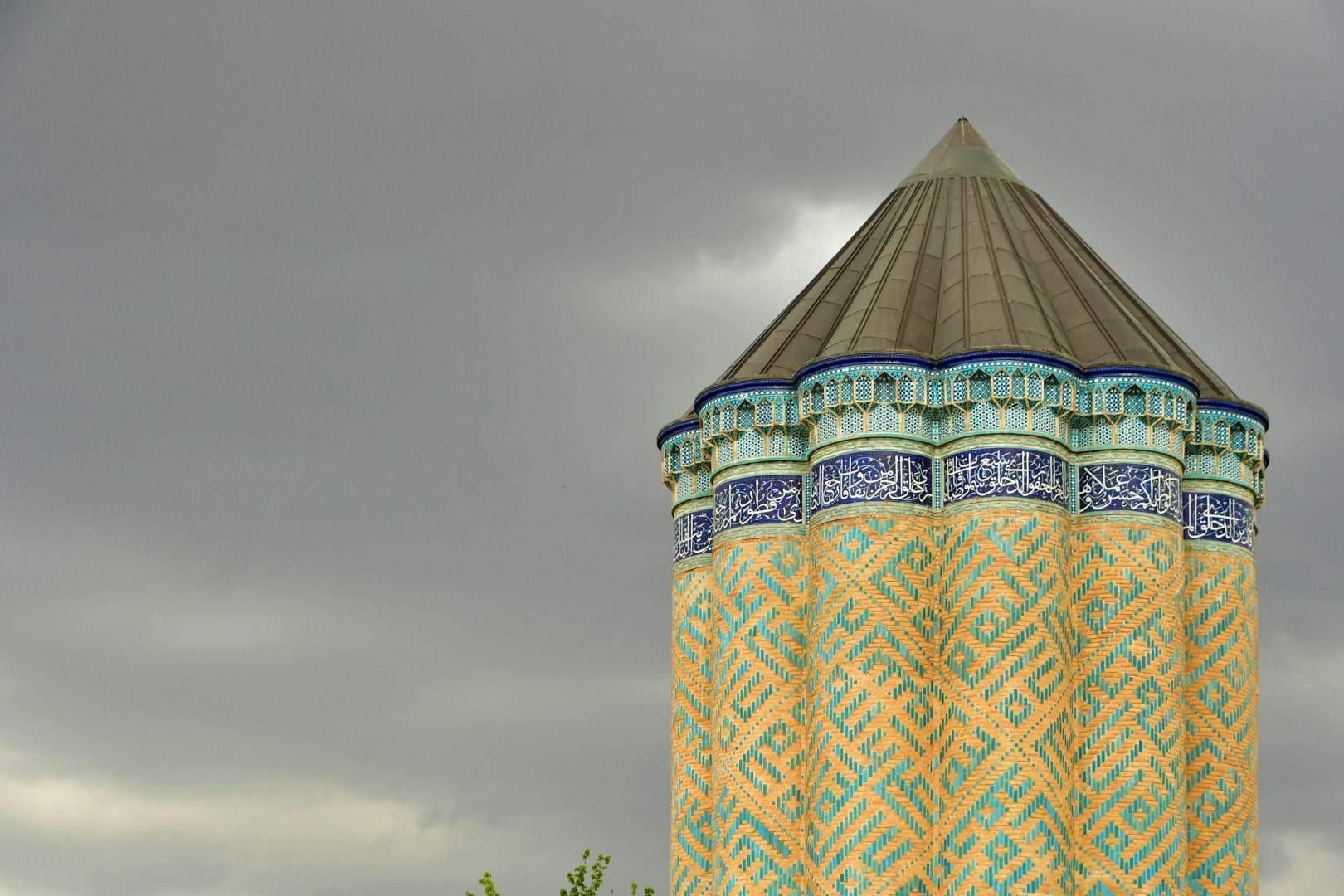
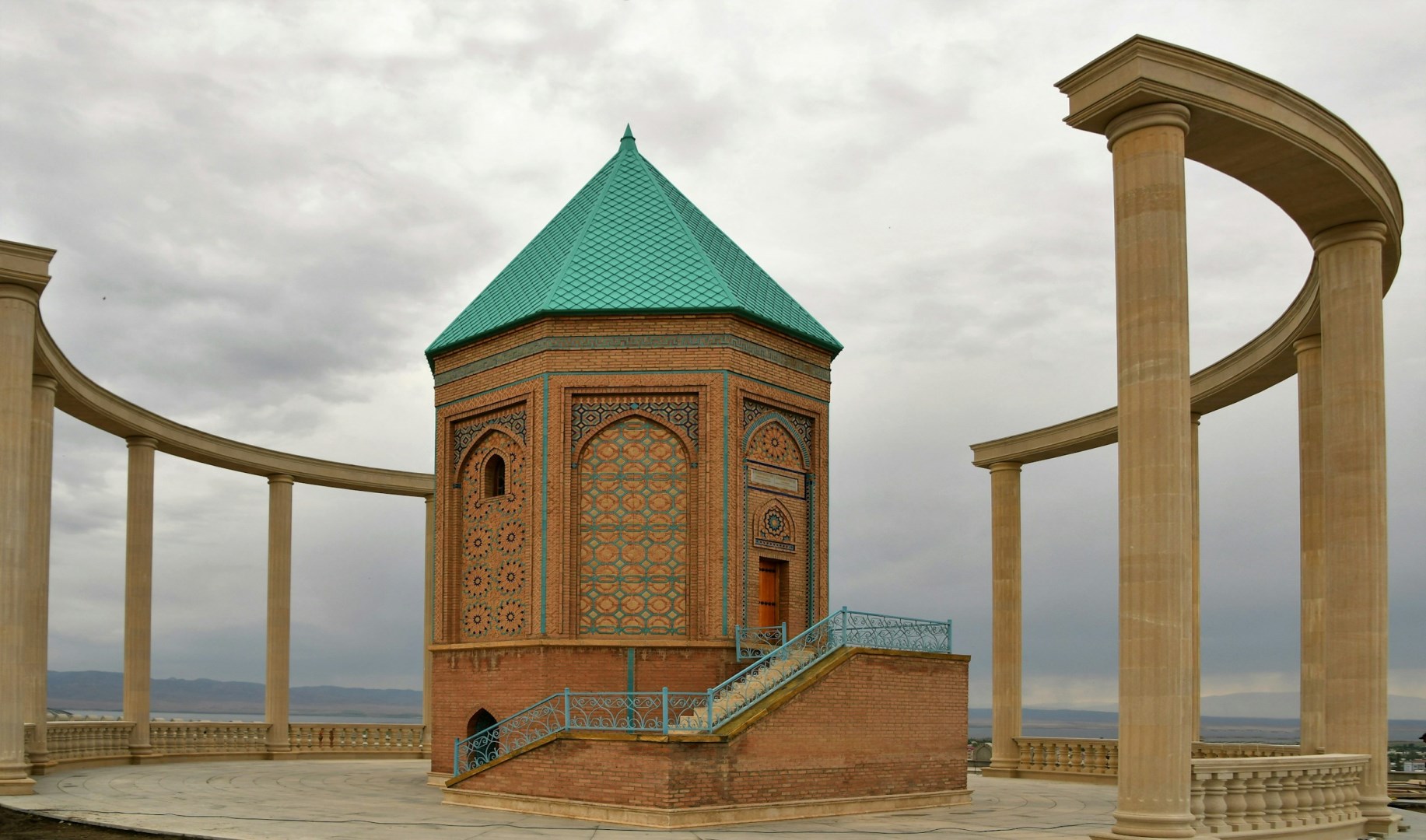
Nakhchivan's cultural identity is strongly connected with its distinctive medieval architecture and religious heritage. The Momine Khatun Mausoleum is one of the city's best-known monuments, recognized for its elaborate geometric brick decoration and tall polygonal form. The Yusif ibn Kuseyir Mausoleum provides another important example of regional mausoleum architecture. The city also has museums dedicated to local history, literature, and art, including the Bahruz Kangarli Museum, named after a prominent Azerbaijani artist. Religious traditions remain visible at sites such as the Ashabi-Kahf sanctuary, which is an important pilgrimage destination in the surrounding mountains.
Alinja Castle is one of the most dramatic landmarks in the wider Nakhchivan region, occupying a steep mountain ridge above the Alinja River valley. The climb to the fortress provides views across the surrounding mountains and countryside. The Batabat area in Shahbuz is known for mountain scenery, alpine meadows, lakes, and the Batabat plateau. Gamiqaya, in the Lesser Caucasus, contains extensive prehistoric rock carvings depicting animals, people, and symbolic figures. Nakhchivan also has more than 250 mineral-water sources, while Duzdag is known for its salt deposits and underground salt-mine environment.
Food in Nakhchivan reflects the agricultural resources of its dry valleys, with fruit, vegetables, grains, meat, and dairy products forming important parts of local cooking. Local specialties include Nakhchivan-style dishes prepared with meat, vegetables, herbs, and grains, while dried fruit and nuts are common products of the region's orchards. The area is also known for mineral waters and traditional salt production. One distinctive feature of Nakhchivan is the concentration of mausoleums, fortresses, rock art, caves, mineral springs, and agricultural landscapes within a relatively compact mountainous territory. These features give the region a clear identity within Azerbaijan.
