


Australia & New Zealand | Australia | Kata Tjuta
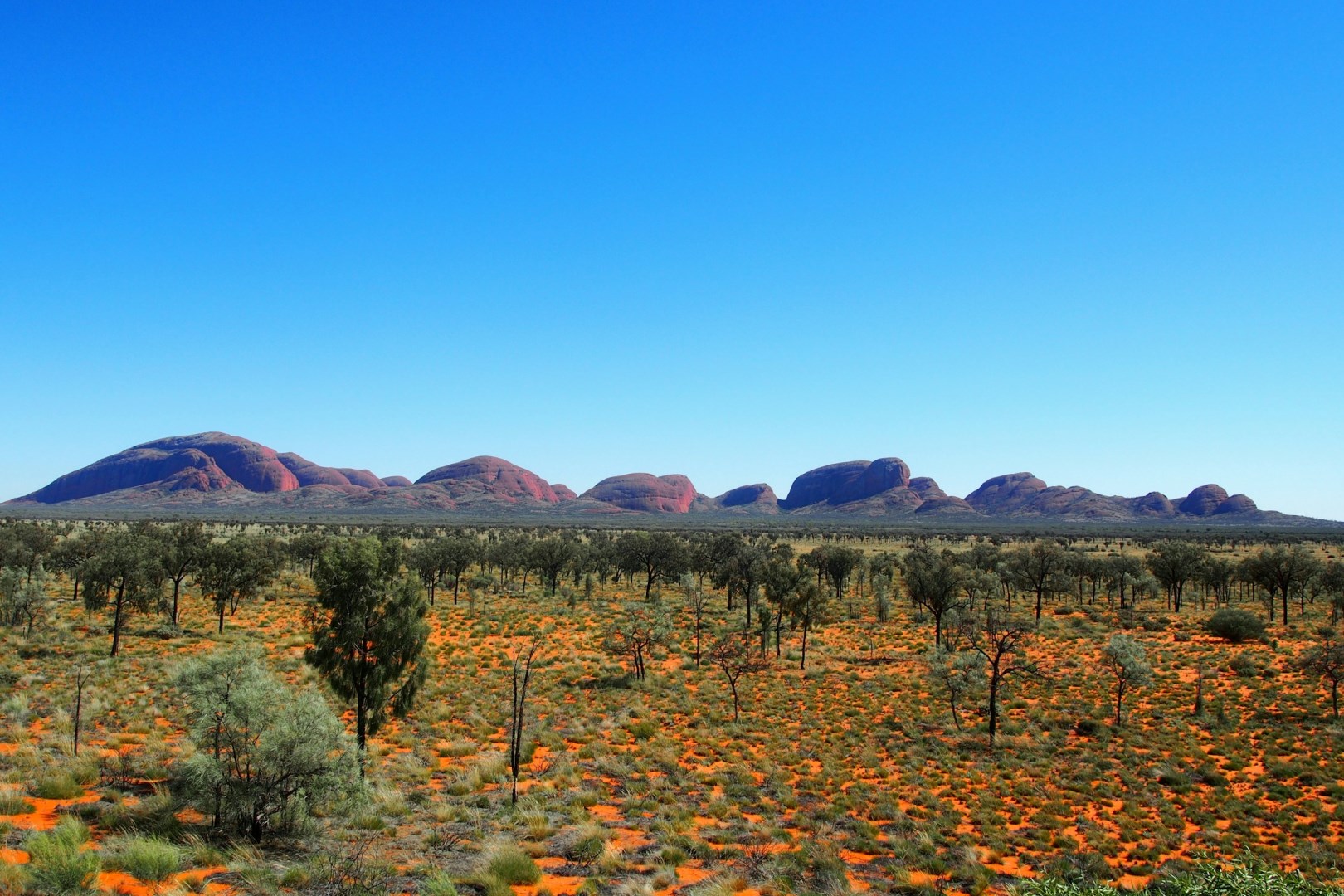
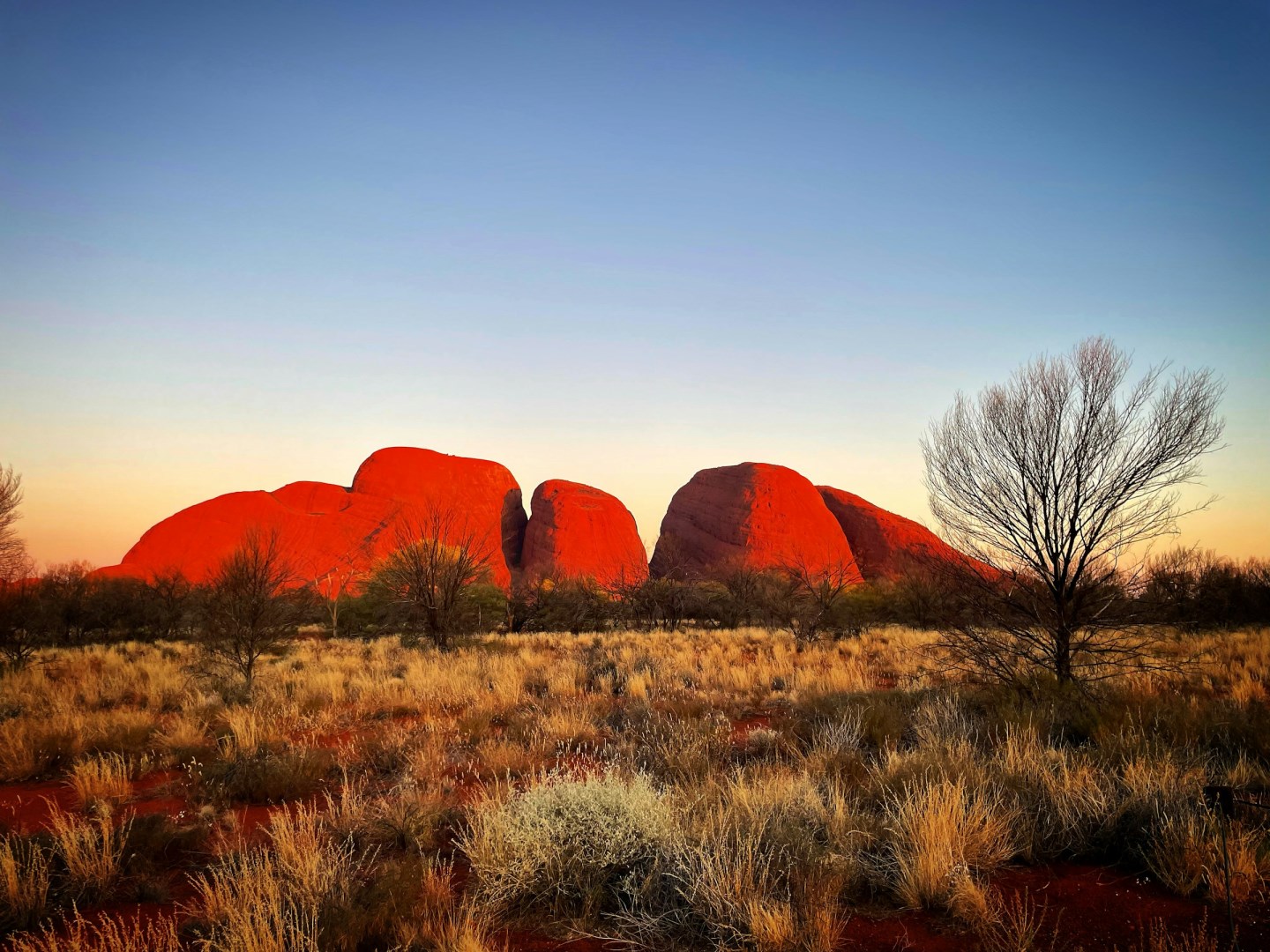
Kata Tjuṯa is a group of large rock domes in the Red Centre of Australia, within Uluṟu-Kata Tjuṯa National Park in the Northern Territory. Located about 40 kilometres west of Uluṟu, the formation rises prominently from the surrounding desert plain and consists of 36 domes spread across a broad area. Its name means “many heads” in the local Aṉangu languages. The rounded, ochre-colored formations are composed mainly of conglomerate rock, creating a landscape quite different from the nearby monolithic form of Uluṟu. Kata Tjuṯa is also a significant cultural site for the Aṉangu Traditional Owners.
Kata Tjuṯa is an important place within Aṉangu Tjukurpa, the body of law, knowledge, stories, and cultural responsibilities connected with Country. Some parts of the landscape are culturally sensitive, and certain stories and knowledge associated with the site are not intended for public disclosure. The national park is Aboriginal land and is jointly managed by Aṉangu Traditional Owners and Parks Australia. Visitors are encouraged to respect marked areas, photography restrictions, and cultural guidance. The landscape itself is understood through relationships between landforms, plants, animals, water, fire, and seasonal conditions, reflecting a detailed and continuing knowledge of the desert environment.
The principal ways to experience Kata Tjuṯa are its walking tracks and designated viewing areas. The Walpa Gorge Walk follows a rocky path between two of the domes, passing desert vegetation and a sheltered gorge environment. The Valley of the Winds Walk is a longer circuit that moves between the domes, through creek beds and elevated viewpoints, providing changing perspectives of the formation. The Kata Tjuṯa dune viewing area offers broad views across the domes and surrounding desert. Walking conditions can vary with heat and weather, and sections of the tracks can be steep or exposed.
Kata Tjuṯa also supports plants and animals adapted to the harsh Central Australian environment. Rocky slopes, gorges, and sheltered areas provide different habitats, with species including black-footed rock wallabies, echidnas, and fat-tailed antechinus recorded in the national park. Aṉangu knowledge also recognizes distinct habitats and seasonal patterns that influence where plants and animals can be found. The wider Uluṟu-Kata Tjuṯa National Park is jointly recognized by UNESCO for both cultural and natural values. Visitors can learn more about the landscape and Aṉangu culture through the park's Cultural Centre and approved cultural experiences.
Other Popular Destinations in Australia


